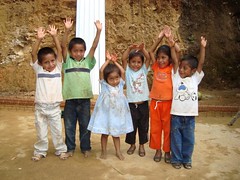
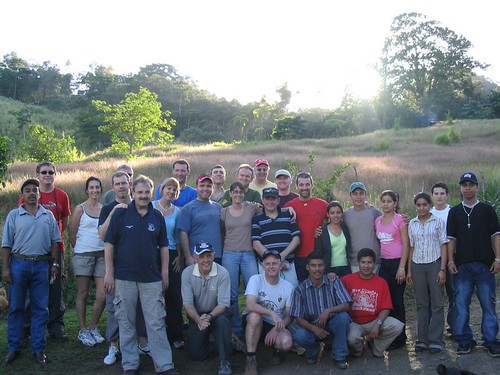
 Nelly introduced me to microcredit and savings groups in the towns of Tierra Blanca and San Jacinto that began in early 2009 and the Los Naranjos group that has three years of experience in microcredit.Upon arrival in the first town of Tierra Blanca, we were served a delicious breakfast that included the local delicacy, ‘Chicatana’ sauce, which is made of queen ants that only emerge at the beginning of the rainy season.Tierra Blanca is not entirely a coffee area. The community is located at 1400 meters above sea level, but many people have coffee bushes in the lowlands. During the morning we organized some activities to learn more about the strengths and challenges confronted by the savings group there.
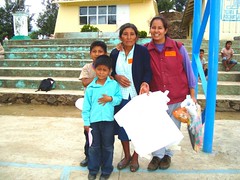 “I feel happy that we have the microcredit group. With the credit I obtain, I can buy cheese in the next town and sell it here because we have no cheese in our community,” said Mrs. Valentina Pérez Herníndez, an outspoken and active woman. “We are just starting our group, but the earnings from the cheese help me care for my youngest son who is seven and my grandson who is five.”In the afternoon, we visited Los Naranjos where the experienced microcredit group was waiting for us. This group recently decided to create a butcher-shop in town with the savings they have accrued.Due to their remote location, a butcher only visits twice a month and the meat is not fresh. During the conversation I realized how FomCafé’s project not only provides participants with access to low-interest credit, but also promotes the teamwork and solidarity necessary to carry out new initiatives.
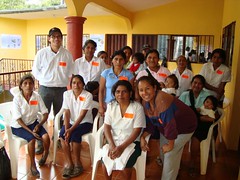 On the second day, our meeting in the village of San Jacinto was conducted in Spanish and Zapotec, a local indigenous language. Eight of the 12 participants only spoke Zapotec.Many of the women in this group are the heads of their households since most of their husbands have migrated or died. FomCafé’s work provides them with new opportunities for greater income and stability in their lives.My trip back to Oaxaca felt much different and the meetings I had reminded me of how it is possible to create with very little and how microcredit and saving initiatives can gradually change peoples’ lives.See more photos from our trip on Coffee Kids' Flickr page.To support this and similar programs in coffee-growing regions, please donate at http://www.coffeekids.org.
 "In the 80s I applied for a sabbatical leave from URI and stayed at Brown University in the School for Portuguese and Brazilian Studies.
 The visit included a tour of CAMPO's new educational center. Buildings are still under construction, but CAMPO is already using the installations to provide training to coffee farmers from around the state of Oaxaca. Demonstration projects include worm composting and standard composting; organic gardening and greehouse projects; fish, sheep, rabbit and chicken production; and responsible building techniques (Check out our
  The organic coffee plot of Don Raymundo Osorio was a striking example of biodiversity and responsible management. His tall coffee bushes were ready for harvest and vanilla vines crawled up their stems providing two cash crops on the same shady plot. Raymundo showed us the beginnings of a greenhouse which will provide vegetables year round, part of a project the community is doing with CAMPO's support.
