coffeekids (20)
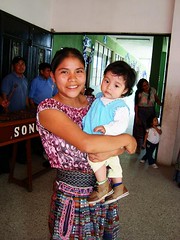 September 7-13, 2009, Program Director Jose Luis Zarate and International Program Coordinator Jose Carlos Leon visited Coffee Kids' partners APROS and ADESPA in Guatemala.Our first stop was in San Pedro La Laguna, on the shores of Lake Atitlan, where APROS trains local health promoters who teach women in their communities pre- and post-natal care, the use of medicinal plants and the importance of a nutritious diet. APROS Widow’s Project offers medical check-ups, basic food supplies, recreational activities, and a sense of belonging for women who have lost their husbands to migration or civil war.
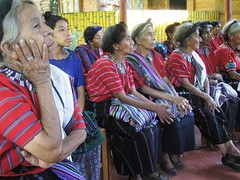 We visited the towns of San Pedro La Laguna, Tzununa and San Pablo La Laguna, where we met with the widows and attended health sessions. Micaela Chavajay, Rosalia Rocche and Maria del Carmen Chavajay, staff at APROS, stressed the importance of these projects in a region where malnutrition is high and medical care is almost nonexistent.On the second half of our journey, we met with Anabella Meneses, director of ADESPA. Anabella introduced us to participants in four projects managed by ADESPA in Acatenango, Paraxaj and the surrounding villages.
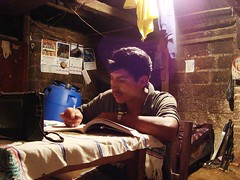 The Adult Literacy Project has been improved to cater to adults who cannot attend regular classes due to work. Radio broadcasts and workbooks are used so that adults can complete learn in the comfort of their own homes. ADESPA’s Bakery Project now employs two fulltime bakers (who were participants in the Literacy Project) who produce fresh bread for the town. The Health Project promotes homeopathic remedies for common ailments. A shoemaker is training women in the Handicrafts Project to make fashionable shoes and sandals.
  Meeting with the participants in their workspaces helped us understand the importance of economic diversity to overcome the economic dependence on coffee production. These projects have given women and men a sense of leadership and the motivation to improve their lives.
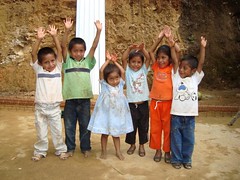 Nelly introduced me to microcredit and savings groups in the towns of Tierra Blanca and San Jacinto that began in early 2009 and the Los Naranjos group that has three years of experience in microcredit.Upon arrival in the first town of Tierra Blanca, we were served a delicious breakfast that included the local delicacy, ‘Chicatana’ sauce, which is made of queen ants that only emerge at the beginning of the rainy season.Tierra Blanca is not entirely a coffee area. The community is located at 1400 meters above sea level, but many people have coffee bushes in the lowlands. During the morning we organized some activities to learn more about the strengths and challenges confronted by the savings group there.
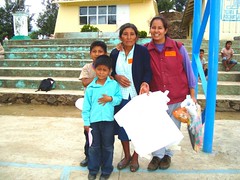 “I feel happy that we have the microcredit group. With the credit I obtain, I can buy cheese in the next town and sell it here because we have no cheese in our community,” said Mrs. Valentina Pérez Herníndez, an outspoken and active woman. “We are just starting our group, but the earnings from the cheese help me care for my youngest son who is seven and my grandson who is five.”In the afternoon, we visited Los Naranjos where the experienced microcredit group was waiting for us. This group recently decided to create a butcher-shop in town with the savings they have accrued.Due to their remote location, a butcher only visits twice a month and the meat is not fresh. During the conversation I realized how FomCafé’s project not only provides participants with access to low-interest credit, but also promotes the teamwork and solidarity necessary to carry out new initiatives.
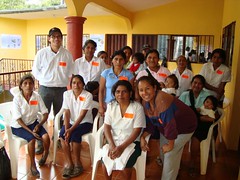 On the second day, our meeting in the village of San Jacinto was conducted in Spanish and Zapotec, a local indigenous language. Eight of the 12 participants only spoke Zapotec.Many of the women in this group are the heads of their households since most of their husbands have migrated or died. FomCafé’s work provides them with new opportunities for greater income and stability in their lives.My trip back to Oaxaca felt much different and the meetings I had reminded me of how it is possible to create with very little and how microcredit and saving initiatives can gradually change peoples’ lives.See more photos from our trip on Coffee Kids' Flickr page.To support this and similar programs in coffee-growing regions, please donate at http://www.coffeekids.org.
 From Friday, June 19 through Friday, July 24, Seattle Coffee Gear, a Coffee Kids supporter, will hold an auction for five Limited Edition Giro D’Italia Giotto semi-automatic espresso machines. One machine will be auctioned off per week with all proceeds benefiting Coffee Kids.The machines, created by Milan-based Rocket Espresso, celebrate the Giro d’Italia, a 1,521 mile bike race through the Italian countryside. The Giro d’Italia along with the Tour de France and World Cycling Championship make up the Triple Crown of cycling.
 Rocket Espresso has created just 100 of these machines based on their popular Giotto Premium+ machine. All feature a Maglia Rosa-inspired pink manometer, individually numbered badges and the names of all 92 winners of the Giro D'Italia machine-engraved on the side.Seattle Coffee Gear has imported five of these limited edition machines for the auction. Visit Seattle Coffee Gear to place your bids and learn more about the machines.
 has done a number of projects for Coffee Kids. After returning from the Peace Corps in Guatemala in the 1995, the photographer got in touch with Bill Fishbein and Coffee Kids to inquire about creating photos at origin.
 Coffee Kids began working with Hagler and she created an amazing body of work documenting the life of coffee-farming families, the conditions in which they live, and the joy that they carry with them.
Visit the Web site, Behind Every Cup, a photo-documentary of the coffee harvest and coffee-farming families. Hagler sells prints of the work and donates 10% of all proceeds to Coffee Kids. If interested, contact her at dorie@doriehagler.com or 505-770-7157
Below is an excerpt from a recent interview done for Coffee Kids 20th Anniversary:
"I took several trips for Coffee Kids and it was an amazing opportunity for a young photographer, that's why I call Bill (Fishbein) my fairy godfather. There are photographers salivating over an assignment like Coffee Kids, but he said yes to me.
"The reason I think he sent me was because he know about my experience in Peace Corps, he knew my relationship with women's groups in Guatemala and that I wasn't going to exploit anyone. Bill always wants to emphasize the strength and dignity of the people Coffee Kids works with and he didn't want some photographer who would jeopardize that.

"I remember one assignment in Mexico where I was sent to photograph the harvest and I lived with a family for two weeks. But the harvest was delayed. We had made all of these arrangements and it didn't look like I would see any of the coffee harvest.
"So I'm waiting and waiting and I called a friend who said I should just keep shooting and I left my head and realized the gift I was given. I was able to live through what these people deal with every year. When is the harvest coming? Is it even coming? What if there is no harvest?
"But I saw the optimism, their confidence that every thing was going to work out and that you just live from day-to-day. I realized that that's how these people have lived all their lives, but through Coffee Kids work, it makes that waiting a little less stressful. Their entire income is not dependent on the coffee harvest.
"I treasure the pictures from that collection, from that town where I spent those two weeks waiting for the harvest."
 Coffee Kids partners, the Association for Research and Training of Southern Mexico (ICSUR) in Chiapas and FomCafé in Oaxaca are working in rural coffee-growing communities to build capacity and reduce reliance on the annual coffee crop, which does not provide enough income for families. Many of their efforts are also helping families deal with the food crisis.Women and men working with ICSUR in Chiapas are learning to raise and sell mushrooms and chickens to diversify their income and bolster family diets. Women working with FomCafé are learning about organic gardening, cultivating food for their families and selling the surplus locally.“Many of the women commented that thanks to these projects they have access to fresh, organic foods for their families, something they couldn’t afford otherwise,” Zárate said. “The same is happening with the women working with ICSUR in Chiapas. Without these productive projects, it would be difficult to afford meat or eggs.”While food security is the major issue families in Mexico are confronting, ICSUR and FomCafé also promote projects in health care, education and economic diversification.Check out photos from our latest visit on our Flickr page.
The Chajulense Association was formed by a group of coffee growers 20 years ago in the department of El Quiche, Guatemala, to better market their coffee. In the past years, Chajulense Association has promoted economic and social alternatives particularly amongst women of the community.
 Last year, Chajulense Association and the women of Chajul initiated a project in textile production supported by Coffee Kids and benefiting 50 women in two communities.
 During the first day, the women took us to the workshop where they produce bags, cushions, scarves, table clothes, napkins, baby shoes, and many other objects. In one year, and with the help of other organizations, the women have standardized their offerings and put together a detailed catalogue allowing them to market their products in Guatemala and abroad.
On the second day, representatives from the group accompanied us to visit women who produce fabric using waist looms in the communities of Chajul and Pulai. This ancient practice allows women work at home and take care of their family without having to commute to a workshop or factory.
 Over the past months, the Chajulense Association renovated a foot-operated loom and built a new one. This loom, along with the training the women received, will increase the textile production to satisfy the demand for handicrafts in the region.
At the end of our stay, the women announced that their group had acquired legal status and will be now called the Chajulense Association of Women United for Life. This achievement shows the increasing confidence among women that up until two decades ago had been living under the scourge of civil war.
On the second leg of the trip we drove southwest to the community of El Palmar Quetzaltenango, where STIAP leads a biodiesel project supported by Coffee Kids.
STIAP's biodiesel production project began in 2005 with the help of a volunteer and researchers from the University of San Carlos in Quetzaltenango. In 2007 the community was producing 100 gallons per week, but this year Coffee Kids provided funds for a new reactor that was built by the community and they now produce 134 gallons per week.
 During the first day at El Palmar, a talented high school student, who is in charge of the processing, explained the details of transforming used kitchen oil into fuel. He also told us how the community plans to use its lower-quality macadamia nuts to produce biodiesel reducing the need for large quantities of used oil from restaurants and shops.
 STIAP cultivates macadamia nuts for national sale and export, but some of these nuts are rejected and can be used in the production of biodiesel. STIAP has also created a youth group interested in biodiesel production to ensure a healthy future for the program. At the meeting, these 10 students, ages 12 to 18, told us that the most experienced from the group are now training others in the production process.
Our stay in El Palmar provided us with a clear picture of how a community can link different projects to improve the overall living conditions of its people.
 The biodiesel not only provides a cleaner fuel for the cars, but it also feeds the generator that provides electricity to the community and its eco-hotel, nut-sorting machinery, water purification plant and administrative offices.
More pictures from the trip will be posted on Coffee Kids Flickr site soon.
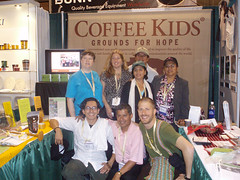 The 20th Anniversary Celebration Dinner went well with almost 300 new and old supporters and members joining us to celebrate 20 years of Coffee Kids and Founder Bill Fishbein's retirement.
 CoffeeGeek.com featured a couple blog posts on our events and our booth.
 "I am part of the children’s savings group called ’Coral,’ this year with the help of Coffee Kids, our group has received training to help us become facilitators, or as we call them, ’promoters.’ We learned about the different types of leadership and other topics like drug addiction, domestic violence, sex education and alcoholism. Since I am also part of a group of women in the GMAS program called ’Las Americas,’ everything I learn with the Coral group, I share with my women’s group
"The ’Las Americas’ group is around 30 women. My mother and one of my sisters are also members. Doña Clara Palma, the coordinator of the GMAS groups and of the children’s savings groups, asked me to share what I learn in my children’s group with the women’s group because it is important to share what you learn. I enjoy this a lot and we use active lessons that are like games and so we learn with more ease.
"Currently, I am studying in secondary school and when I grow up I would like to be a teacher because I really like to teach. The topics that I like most are leadership, because I think that we women can also direct things. And I like to explain things related to the environment because they are very important and because we cannot afford to lose what we have.
"When the women in my group listen to me, I feel great because I don’t feel nervous talking in public. Before I was nervous and scared, but not anymore. I’m not paid for this work, but I gain confidence in myself and now the women in my group know that they can listen to children as well as adults."
 "In the 80s I applied for a sabbatical leave from URI and stayed at Brown University in the School for Portuguese and Brazilian Studies.
"In order to get to Brown, I would walk from my house through Wickendon Street to the east side of Providence to Brown. I would stop at Bill's store, the Coffee Exchange, for some muffins on my way to work and on my way back and that's when we started to discuss coffee and poverty.
"So when Bill told me he was going down to Guatemala, I said, 'What are you going to do when you get there? Who are you going to see?' And Bill said, 'Well, I don't know. I just have to go.'
"So we looked at the schedule and started to set things up.
"I called up Partners for the Americas and Bill and I figured out a way for him to visit some of these coffee regions and so he came back and said, 'We gotta' do something.'
"I said, 'What?' He said, 'I don't know, what?'
"Sometime along when we were starting to figure things out and we'd started to do some fundraisers, I invited Dean Cycon and he and Bill hit it off and Coffee Kids mushroomed from there."
For more information on the history of Coffee Kids, download our latest newsletter (PDF 1.9MB).

"I learned this work watching other women who dedicated themselves to this activity in the community of Patzicia and since it the work appealed to me, I decided I wanted to learn. In the beginning it was hard because no one was teaching me and so the only way to learn was to put the needle in the beads and begin with a line that took me almost a week. I was the first in my familiy to learn this work and afterward I taught my sisters, now we all do this work.
"Now we are teaching all of these women. I told them to take advantage o the opportunity to learn because you can make money in this business. We deliver our products to three places in the town of Chimaltenango, and in the festival season they sell very well. The type of embroidery varies depending on the community, each place has its own colors. For example, in some places the colors of red are used a lot and they don't use white, but this changes according to town and traditional dress.
"The 'fajas' we make can be sold at an average price of Q125 ($17); and to the public in the store sthey sell at about Q150 ($20). The materials to do this work are expensive and we buy them in the town of Patcizia which is about a half-hour away.
"I am single , but when I have my children, I'm going to teach them everything because my mother liked to work a lot and she made many things. She didn't know how to do this work, but we learned other things with her such as weaving and embroidery and other types of clothes."
 Thanks to all of our sponsors and those who signed up early, Coffee Kids’ 20th Anniversary Celebration Dinner at the SCAA Conference in Minneapolis is sold out. We look forward to celebrating two decades with everyone attending.If you weren’t able to get tickets to the event, be sure to visit our booth (#1241) in the exhibition hall. We’ll be featuring information and pictures of our with coffee-growing families.

Coffee Kids' non-commercial approach to development has helped tens of thousands of coffee-farming families. But millions more are in dire need. "It became obvious to me that Coffee Kids was going to have to be around for a long time," said Fishbein. "To do so, it had to become free from its dependency on me. The organization has been transitioning toward this day for several years, since Carolyn Fairman took over responsibility for day-to-day activities as executive director."
"Coffee Kids is no longer dependent upon me," added Fishbein."The staff is led by an executive director whose heart and sensibilities are deeply rooted in programs. With a well-seasoned president and depth in grassroots program development, organizational development, finance, marketing and fundraising, the board is more capable than any other time in Coffee Kids history. I have no doubt Coffee Kids will follow the mission instead of the money."
Rob Stephen, President of the Coffee Kids board of directors said, "As we celebrate the 20th anniversary of Coffee Kids, we applaud Bill's vision as the founder of this extraordinary organization. To truly honor his work over the last two decades and demonstrate respect for his decision to step away, we will hold fast to our mission, remain focused on meaningful programs, and continue to build infrastructure that increases our capacity to do good. The best way to say thank you to Bill and all those who have made our first 20 years possible is to ensure we are built to last well into the future."
Fishbein's vote of confidence comes as Coffee Kids prepares to formally mark its 20th Anniversary with a Dinner Celebration May 3, 2008 at the Minneapolis Convention Center during the Specialty Coffee Association of America's 2008 Conference & Exhibition. For more information call 505-820-1143 or email info@coffeekids.org.
I don't know that I have ever seen such an extraordinary spirit of generosity, compassion, adventure, fun and learning. I myself learned about the Irish and their history and just what incredible people they are. There were people from each region of Ireland, including Northern Ireland. Because of the history of poverty and violence that Ireland has experienced and because they were able to overcome that history largely due to education, these travelers felt a sense of solidarity with the Nicaraguan people. Nicaragua is the second poorest country in the Western Hemisphere after Haiti. Nicaragua has experienced a long history of civil strife, corruption, and poverty.
Perhaps it was this ability to identify with this shared history and to see the hope for the future that lead to such exceptional generosity on behalf of these Irish travelers. But I don't think so. I think they are just highly compassionate people. ..
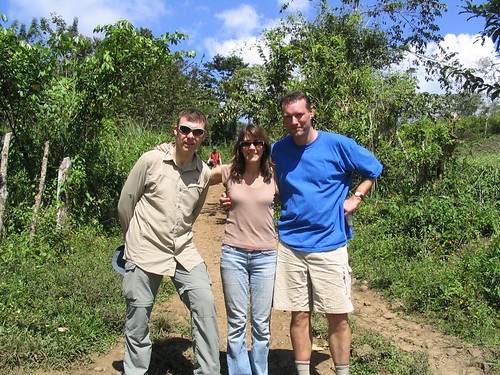
I watched as 17 people made a concrete difference in the tiny community of Aguas Amarillas by supporting the students struggling to continue their education and learn new technologies to bring them into the future. Perhaps the most moving gesture, at least to me, was that each one of these people brought back the knowledge that they can make a difference -- not just by being associated with Java Republic, but through their own personal commitments to support Coffee Kids and generate more support for the town of Aguas Amarillas and so many like it throughout Latin America...
I have never been so proud to represent Coffee Kids internationally and of the work that we do. I can't thank them enough for all that they taught me about the impact an individual can have on the lives of others. They each touched many lives, not least of all my own.
Check out pictures from the trip at Coffee Kids Flickr site or you can visit this site and see photos of the trip from our friend Patrick Jordan who was one of the visitors with the Java Republic.
..
 The visit included a tour of CAMPO's new educational center. Buildings are still under construction, but CAMPO is already using the installations to provide training to coffee farmers from around the state of Oaxaca. Demonstration projects include worm composting and standard composting; organic gardening and greehouse projects; fish, sheep, rabbit and chicken production; and responsible building techniques (Check out our programs page for more information on CAMPO).
CAMPO's offices are being constructed using a compacted earth technique, which is similar to adobe with a mix of soil, sand, lime and water optimized for local conditions and compacted into a sturdy wall.
The day after our visit to the center, we traveled two hours down windy roads into the mountains outside of Oaxaca, and then two more hours down a dirt road clinging to the side of said mountains. After four hours of stomach-turning travel, we arrived in Santa Cruz Tepetotutla, a small town clinging to the mountain.
The town is in the middle of a globally important bio-reserve. Jaguars and tepesquintle (similar to a giant spotted rat) maraud the area and lush forests hem the town in. Most families work in coffee and have struggled for years. Thanks to CAMPO's help many have begun working in other areas to supplement their income and provide a better quality of life for their families and improve their community.
 The organic coffee plot of Don Raymundo Osorio was a striking example of biodiversity and responsible management. His tall coffee bushes were ready for harvest and vanilla vines crawled up their stems providing two cash crops on the same shady plot. Raymundo showed us the beginnings of a greenhouse which will provide vegetables year round, part of a project the community is doing with CAMPO's support.
We returned to the town center to visit with local leaders and learn more about Santa Cruz's history. The town's commitment to protecting their forests, water supply and biodiversity has earned them financial incentives from the government for the maintenance of their resources. Their environmental vision and resources also attract a steady stream of students and researchers to the area and they are constructing a research center for these visitors to create additional income for the community.
Community leaders also told us about their struggle to build a road to their community. Until about four years ago, people from Santa Cruz had to walk hours to reach the nearest road. All supplies were packed in. But with a strong effort and support from CAMPO, determined community leaders navigated endless bureaucratic processes to build a road and connect their town with the outside world.
The following day we followed a steep footpath straight down the mountain to arrive at the neighboring community of San Antonio del Barrio, still inaccessible by road. We arrived sweaty and tired in this tiny town in the valley, where we were welcomed by local officials and a marimba band. We met with a group of women who, with CAMPO's help, have started selling their elaborate, hand-embroidered huipiles (traditional blouses) in Oaxaca City. After the visit, we made the long journey back to Oaxaca City.
The next morning we visited with Coffee Kids partner FomCafe and toured a dry mill, recently purchased by four Oaxacan coffee cooperatives to consolidate and gain control over their production process. We learned about the detailed steps of dry mill processing, but more importantly how the four cooperatives pooled their resources to purchase the mill.

Like so much of what we saw on this trip, it was a reminder of just how enterprising people can be when they are determined to create a better life, and just how much impoverished communities can accomplish with a little bit of help.
Black Coffee is a three-hour, three part movie chronicling the history of coffee and the conditions faced by coffee farmers. It gives a great unbiased overview of the coffee industry, but also explains the challenges that coffee farmers are facing.
Black Gold is another good movie to check out. It's gotten a bit more publicity than Black Coffee, but gives a good overview of the plight of coffee farmers.
Let us know if you get a chance to check them out and what you think.
