All Posts (19)

Sort by

Remix – the Spanish Coffee

3418344485_ca1ab0072d_z.jpg?w=300&h=200

One of my favorite drinks can be found in Portland, Oregon at a long-lasting bar called Paddy’s. Paddy’s is a gorgeous older bar, with a back bar nearly forty feet wide and sixteen feet tall, replete with two of those rolling library ladders for the bartenders to get to the ultra-premium top shelf. This bar, on St. Patrick’s Day, is jammed beyond belief. The drink there I like is their version of a Spanish Coffee. It’s a showy exhibitionistpreparation, with flaming alcohol, rum and whipped cream.

There’s some argument in Portland that this drink has it’s roots at a venerable local restaurant,Huber’sHere’s a video I found on Youtube of them making it at Huber’s.

Last night I decided to try remixing this recipe with Mocafe Azteca D’oro 1519 Spiced Ground Chocolate. Oh my lord. It was one of those clear chilly New England summer nights and this drink was a hit with my friends. Simply substitute the coffee in the drink with Mocafe Spiced Ground Chocolate hot chocolate.

If you entertain a lot at home, this drink is sure to be a crowd pleaser at your next party. By the way, I stood in for my Dad years ago, giving my sister away in marriage to one of those Paddy’s Bar ladder-jockey bartenders, in the back dining room. Talk about an Irish wedding!

Jeff from Mocafe

Read more…

Item Costing Your Cafe Menu

Solutions for Operators

recipe-costing.jpg?w=264

A standard practice in the restaurant industry is to calculate the food cost of every item you sell. Knowing this cost allows you to a) purchase ingredients more wisely and b) maintain and train staff to standards. There is a time investment in making these calculations, but the reward is a "tighter ship", leading to greater profit opportunity and lessening of production costs.

So how do you calculate the production cost of your menu items? If you ballpark it in your head, it's likely to not be accurate. Let's get started in a demonstration. First, download the sample Food Cost Worksheet. Then you'll need tools to measure: a scale and volume measuring (cup/teaspoon) tools are necessary.

Click this link to open a Food Cost Worksheet Template you can download for your use.

Please notice there are formulas in some of the cells. Be careful to not edit those cells.

Let's fill this worksheet out for a bagel with plain cream cheese. The first thing to do is enter the date and the recipe name: "Bagel with Cream Cheese". We're not going to enter anything in the cells named "RecipeMultiplied" nor "Size" - we don't need these for this sample.

Next, let's enter the sell price for this item. I randomly chose $2.95. We don't need to enter anything in either of these two cells (there are auto-formulas in them): "Cost Per Portion" and "Cost %".

Now let's enter our ingredients. We type in Bagel (be as specific as you want - this is a text cell). Moving right, we enter the number 1 in the "Count" column. Moving right again, we enter the cost of that one bagel in the "AP$/unit" cell. Let's pause so I can explain these column heading in both the measures section and the costing section.

In the measures section, we have three columns marked "Weight", "Volume" and "Count". If the ingredient is measured by weight, enter it in that column (this is when you need a scale). If measured by volume, enter the volume amount in that column. The same goes for count.

In the costing section, we have the column marked "AP$/unit". "AP$/unit" stands for Price of Ingredient As Purchased, per unit of measure. In this example, the cost of one plain bagel is $0.75 each.

The right-most column is the subtotal for this ingredient. You'll need to enter a formula in here. The formula for the bagel in this example looks like this:

=sum(E10*F10)

E10 is the cell that contains the count of the ingredient. F10 is the ingredient cost. The multiply function is the star character *

Writing the formula in this column is pretty easy. You only need to choose which cell from the measure of the ingredient you want in the formula. It is going to be in either the Weight, Volume of Count cell of that row. Let's look at the next ingredient to demonstrate what I mean by this.

The next row down has the cream cheese ingredient. I've put in one ounce by weight and entered the cost per that weight measure (ounces). The formula I write in the subtotal column looks like this:

=sum(C11*F11)

Pretty simple, really. In the old days, they'd do this with a calculator and note paper. Once you get comfortable entering the subtotal formulas, it goes pretty quick. By the way, if you have multiple ingredients in the same measuring column, simple copy the formula from one row to the next.

So what happens now?

The worksheet automatically adds up all the subtotals at the bottom. It also calculates the food cost percentage. These are handy numbers for you to know. You now know exactly how much a menu item costs in raw materials. You also know how much of the menu selling price that cost is; in this example, 36.6 percent.

Got questions? Feel free to comment below and I'll answer.

Jeff from Mocafe

Read more…

Guatemala San Juan Pixcaya

Guatemala, San JuanConpecion de PixcayaAcid: Medium-highBody: MediumTexture: clean and juicy, mouthfeel of apple juiceFlavor Profile: exceptionally balanced in all aspects. From the grind are lime, cherry, caramel and milk chocolate. Once wet the same are found and the cherry enhances. The acidity is a juicy lime and sweet cherry that carries throughout. Deeply carmelized brown cane sugar and soft milk chocolate flavors in a well rounded medium body. Long finish with the acid going slightly floral with a tiny dry bite at the end.Noteworthy: Conpecion Pixcaya Farm in the San Juan region is a 4th generation farm run bythe Miron family. Managed and replanted solely from it’s own resources. 100% Borbon, depulped naturally without water, then washed before patio drying. Elevation 6200 feet. Pixcaya coffee placed 20th in the 2011 C.O.E. competition.
Read more…

Hobby

My main hobby is coffee roasting and brewing. There is nothing like freshly roasted beans. There are two main ways to roast coffee beans: hot air and drum. My methods for roasting may seem primitive to some, but it works for me.

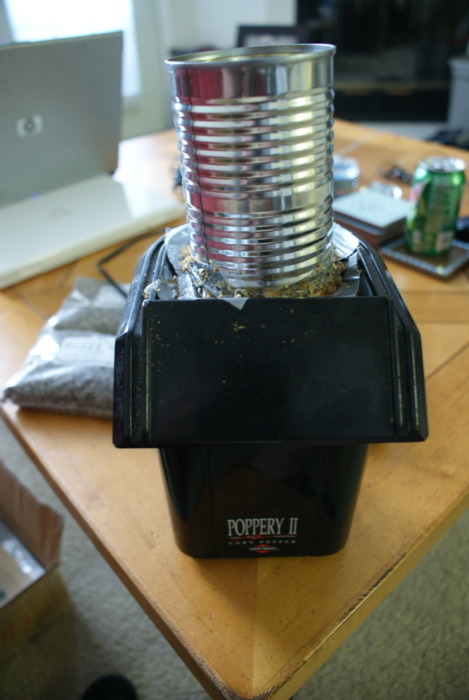
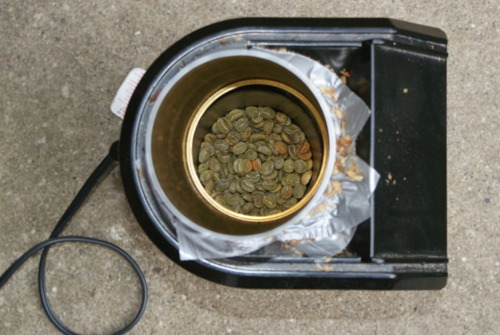
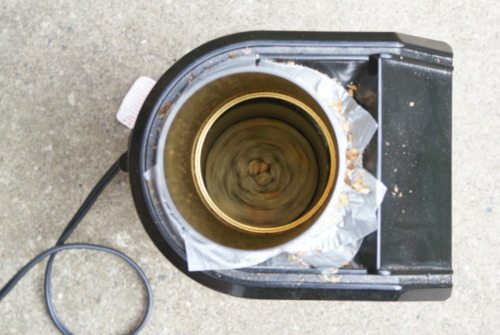
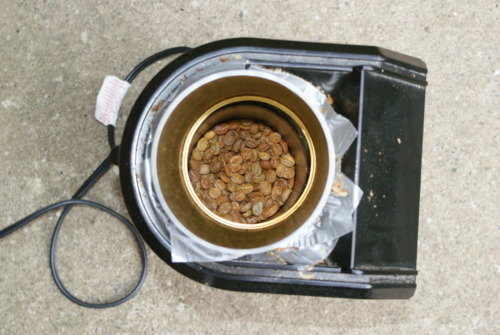
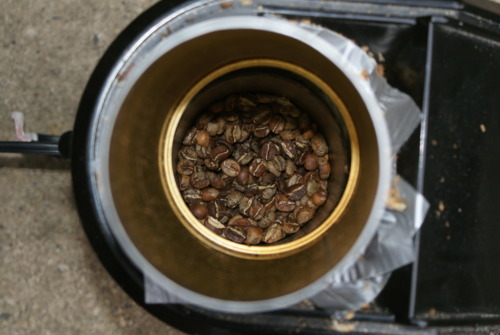
Initially, I used a conventional oven and a ceramic plate to roast the beans. The main flaw in this process is that the beans do not get roasted consistently. Depending on ones oven, the beans on the outside of the plate will get roasted before the beans on the inside, in which case you would need to continually stir the beans. This was too much toil for below average results. Currently, I use an air popcorn popper that I bought at a thrift store for $5.00. I modified it by attaching a tin can to the top of the machine with duct tape. This method is much more consistent and I am very happy with the results. Not to mention it’s easy. I measure out 1/3 cup of green coffee beans and roast for about 5 to 8 minutes depending on the type of beans and desired flavor characteristics.

Unroasted beans do not smell like the coffee you would smell in a coffeehouse, but rather an earthy smell. Only until a couple hours after the beans have been roasted do they develop a rich pleasant coffee aroma. Green coffee beans have chaff wrapped around them that crack and pop while roasting. These are gauges that tell me how far along the beans are in the roasting process. The purpose of the tin can is to funnel the air from the machine to be strong enough to push the chaff out of the roaster once detached from the bean. (This can be a bit of a mess if roasting indoors.) When the beans are done roasting in the air popper, I pour them out onto a plate to be cooled to room temperature. The beans do roast internally for a little while after being poured out. Once cooled the beans immediately go into an airtight container or bag with a one-way valve. The longer that the beans are exposed to oxygen, the less fresh they will be. After roasting, coffee emits carbon dioxide (CO2). It is best to wait between 12-24 hours before you grind and brew coffee after roasting.

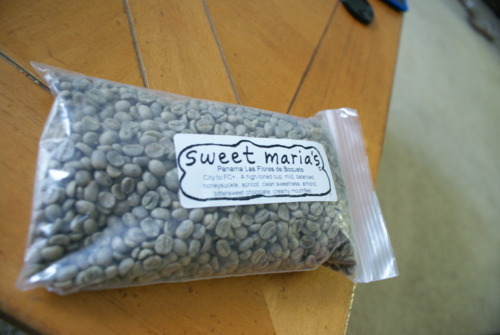
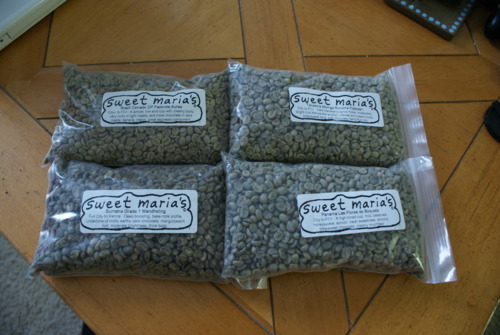
I order my green beans from an online company called Sweet Maria’s. They have a wide variety of beans available. Another company to look into is Velton’s Coffee, which can be purchased through Seattle Coffee Gear. I just ordered a 4 lbs sampler pack from Sweet Maria’s. Included were: Brazil Cerrado DP Fazenda Aurea, Sumatra Grade 1 Mandheling, Tanzania Mbinga Ruvuma Flatbean, and Panama Las Flores de Boquete. This week I roasted the Panamanian beans. I roasted them to a medium roast. The results were a mild, balanced, smooth cup. 

This week my friend sent me an article about a guy who uses a bread maker and a heat gun to roast coffee beans. It’s pretty interesting. Here is the link:

http://www.nbcdfw.com/the-scene/food-drink/Do-It-Yourself-Coffee-Maker-Brews-His-Passion-125171779.html

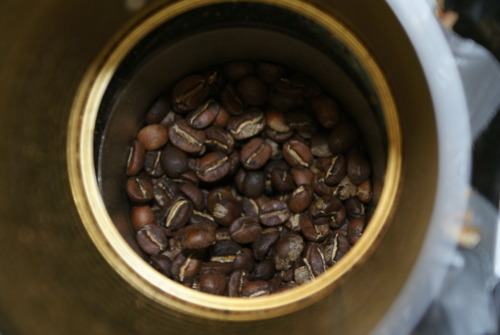
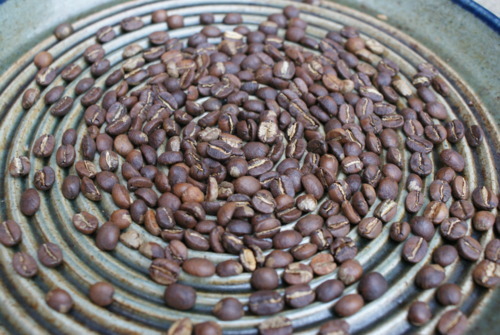
Here are some photos from my roasting this week:


image


image


Green Beans from Sweet Maria’s


image


The equipment


image


image


image


image


image


image


End result.

<!--EndFragment-->
Read more…

Completely Done

31139454865?profile=originalAnd Done!  -  the last touch was because of the new steam boiler I had to make new brackets or the group heads would move slightly up and down.  I used to flat aluminium rods and drilled some holes to hold the top of the coffee boiler to the top of the steam boiler.  It took about 20 hours and three pages of parts.  I'm not looking forward to paying the parts bill but I'm sure asking about $6500 will cover it.  It runs perfectly just like a brand new linea!!
Read more…

Daughters, Oil Changes and Hot Chocolates

oil.jpg?w=300

A few nights ago I was with a good friend, hanging out in the garage, as he taught his young teenage daughter how to change the oil on a SUV. They were both under the truck, poking around, as he explained everything about oil's function in engines.

This time they spent together was pretty awesome to witness. I saw a dad and daughter bonding, as she understood that her dad was giving her life-skills toward independence. More importantly, he was spending time with her.

As they emerged, task completed, I handed both of themsteaming hot chocolates. I then intentionally wandered off for a walk down the street, to give them space to chitchat.

Jeff from Mocafe

Read more…

Operator Solutions Using Mocafe

In my prior career as a executive chef, I wrote hundreds of work schedules. Let's look at some factors operators have to take into account in managing efficient production labor cost:

  • Staff training and abilities
  • Anticipated business volume
  • Local event calendars
  • Potential constraints (risks to the schedule)
labor-cost.jpgThe question today is, when you write a labor schedule, do you estimatehow much you're going to spend for each day and for the schedule time period on labor?
I made it a habit to do this. I did not share this information with line staff, but on demand from my employer, could state what I expected to spend for each day and for the time period. Doing this estimating also made me accountable to my responsibilities.
So how can you setup a simple solution for estimating? Well, we've put together a simple Excel template that you can download here.
Simply enter the names of employees and their wage rates. Then enter the hours for each shift they will work. The spreadsheet will automatically calculate gross wages for each day and for the week.
Bear in mind that this template does not account for any employer paid tax obligations, so you'll need to determine what that additional percentage of expense is. It also does not account for overtime, as the laws in each state are different.
Again, please feel free to download this template and use it and/or modify it to your needs:
Jeff from Mocafe
Read more…

Guest blog: What’s your barista’s name?

31139457882?profile=originalBy Christoper Porter, Cofficer

First of all, my thanks go out to Heather and Jessica, the duo at Rock n’ Java (Twitter/Facebook) in Tucson, AZ, who greet me every morning, keep my cup full and make it difficult for me to call anywhere else my Coffice.

Having said that, let me ask you, my co-Cofficers, a question (in several parts): Do you know the names of the baristas you see everyday? Have you ever had a small talk conversation about their ambitions? Hobbies? The weather? Anything?!

If you say you don’t care, you should probably move on to another website. This won’t apply to you. There’s nothing to see here…more

Read more…

Saturday mid-day.

south-station.jpg?w=300

I'm at Boston South Station, waiting for a bus up to northernNew Hampshire. It's hot. Really hot. Not only that, it's also wicked muggy.

I have a couple hours to kill, so I've been outside on Atlantic Avenue. Across the street is a brand new Dunkin' Donuts - not even open yet. The pavement and brick radiate the heat on me. I'm sweating like a dog.

I duck back inside to South Station and wander the food court, looking for one of my favorites; Mocafe Ice Blended Frappes.

Nada. Zilch. Zero. No Go At The Station.

Finally, I settle on a large lemonade from McDonalds. Definitely not my first choice, but it's got ice in it.

There's two independent coffee bars in Boston South Station. Neither offered frappes. If I had a Mocafe sample with me - I'd drop it off for them to try.

Jeff from Mocafe

Read more…

Operator Solutions Using Mocafe

One of the challenges facing foodservice operators dwells on the question of preparing items from scratch or purchasing products that require minimal labor. This question permeates the foodservice industry at all levels, from quick serve (QSR) to ultra-hyper-local-fine-dining.
Attend any foodservice or beverage tradeshow and you'll see numerous exhibitors offering solutions that address this question. How do you determine what is appropriate for your shop?
The factors to consider in this equation include, but are not limited too:
  • customer perceptions and demands
  • labor force skill, knowledge and passion and budget
  • brand promise and message
  • production space, design and storage
sandwich-shop-guy.jpg?w=185
We'll come back to this topic again in the future, so for this blogpost, lets just focus on the second item; labor. Let me ask this question..
When you calculate the production cost of your menu items, do you calculate the average time it takes your staff to prepare said items? When I was anexecutive chef, that was a standard process in determining menu sell prices, production cost of plate and, ultimately, how much bottom line revenue each item produces to profit.
How do you calculate this factor? First, determine what average pay level will be preparing the item. Second, figure out the average time it will take to prepare. Those two variables will give you the information needed. Example:
Sandwich
Counter help average labor cost at $10 per hour. $10/hour divided by 60 minutes equals 17 cents per minute.
Average time to prepare sandwich equals five minutes.
17 cents multiplied by five minutes equals 85 cents per sandwhich.
This quick formula will give you one basis for evaluating whether to prepare items from scratch or from Ready-To-Go solutions. Again, we'll come back to this topic and look at other assessment tools in future postings.
Jeff from Mocafe
Read more…

Operator Solutions Using Mocafe

One of the challenges facing foodservice operators dwells on the question of preparing items from scratch or purchasing products that require minimal labor. This question permeates the foodservice industry at all levels, from quick serve (QSR) to ultra-hyper-local-fine-dining.
Attend any foodservice or beverage tradeshow and you'll see numerous exhibitors offering solutions that address this question. How do you determine what is appropriate for your shop?
The factors to consider in this equation include, but are not limited too:
  • customer perceptions and demands
  • labor force skill, knowledge and passion and budget
  • brand promise and message
  • production space, design and storage
sandwich-shop-guy.jpg?w=185
We'll come back to this topic again in the future, so for this blogpost, lets just focus on the second item; labor. Let me ask this question..
When you calculate the production cost of your menu items, do you calculate the average time it takes your staff to prepare said items? When I was anexecutive chef, that was a standard process in determining menu sell prices, production cost of plate and, ultimately, how much bottom line revenue each item produces to profit.
How do you calculate this factor? First, determine what average pay level will be preparing the item. Second, figure out the average time it will take to prepare. Those two variables will give you the information needed. Example:
Sandwich
Counter help average labor cost at $10 per hour. $10/hour divided by 60 minutes equals 17 cents per minute.
Average time to prepare sandwich equals five minutes.
17 cents multiplied by five minutes equals 85 cents per sandwhich.
This quick formula will give you one basis for evaluating whether to prepare items from scratch or from Ready-To-Go solutions. Again, we'll come back to this topic and look at other assessment tools in future postings.
Jeff from Mocafe
Read more…

Back at it

Well I finally got a chance to work on my project again.  Of course the first thing I do is fine a huge problem with the boiler.  It is too tall, the sight glass doesn't register correctly and the PRV will touch the top panel.  I removed the supports and am in process of grinding them down, that is some hard steel man!
Read more…

Operator Solutions Using Mocafe

Last night, a perfect New England summer night, I was talking about cafe and restaurant management with an old friend, a former executive chef (like me), restaurant owner and major lines food salesman. The topic of passion was how old-school successful operators calculate the hourly success of their business.

One of the tricks old-school operators use is knowing exactly how much money each item sold puts to their bottom line. A good operator can stand in the middle of the shop and point at each item sold and tell you:

That turkey panini puts $3 to my bottom line. That frappe makes me $2 every time one is sold. Thatapple fritter drops a buck in my pocket every time we sell one.

Now they aren’t telling you how much each item sells for; they’re telling you how much profit each item makes.

restaurant-2-bw.jpg?w=300&h=200

How many operators today, or, cafe managers, can tell you how much a sale of every item in an hour puts to profit?

How do you calculate this? In future blogposts, I’ll cover calculating food or beverage cost, calculating labor cost, and calculating operating expense and how to calculate each of these factors on a per item level. Basically, it works like this (example):

Item Sell Price – Ingredient Cost – Labor Cost – Operating Expense = Profit, or, “What Goes In Your Pocket”

By the way, neither of us ever shied away from revealing this information to our staffs. In fact, we often shared this information, as doing so 1. taught staff valuable skill toward becoming a more valuable employee and 2. motivated them to upsell customers to more profitable items.

Have you calculated the profit you make from the sale of each item you offer? We’d love to hear your opinion and methods of tracking cafe performance.

Jeff from Mocafe

Read more…

Fair Food: Fried Kool Aid but No Good Coffee

Last weekend was the first day of the OC Fair in Costa Mesa, CA and boy was it packed!

Not only did it take fifteen minutes or so to find a parking space but there were hundreds of people in line waiting to buy tickets (good thing we already had ours, haha).  At least it was a gorgeous day out so time seemed to go by pretty quick.

crowd.jpg?w=300&h=224

Everyone knows the best part of any fair, the food!  They have everything and you can get the majority of it fried ;-) .  Now I am probably a little biased as I work for a coffee company, but the one food/beverage item that missing was good coffee.  I mean there were no coffee places at all, and we walked the whole fair (in fact I didn’t even see a place that sold coffee other than the general food kiosks).  It doesn’t make any sense to me.  Coffee and tea sell a ton, especially if it is good.  It has got to be a matter of time before jumps on this and opens a rockin’ coffee place.

Read more…
Haven't posted on this guy in quite a while. I haven't been posting on my regular blog either though, so I'm not feeling too guilty.

My store is losing half of its staff in a few weeks and I'm almost done hiring to fill all the positions. Pretty effin excited about my new baristas! New employees are so....fresh and...motivated. And generally don't have those "terrific" attitudes like old employees do. Very excited. Also extremely happy about all the work Claire's putting into the new training material and the training program in general.

Moving back to Belhaven tomorrow. Can't wait to be in town again. I'm ready for my peaceful spot all to myself again.
Read more…

El Salvador El Manzano

El SalvadorEl Manzano Lot 1Acid: MediumBody: Medium plusTexture: mainly clean and juicy, hints of red apple skin.Flavor Profile: starting from the grind are scents of juicy plum andlime acidity. Some cinnamon and cedar or woodspice as well. Once wetthe lime subsides and cherry takes over to blend with the plum. Goodround body full of carmelly brown sugar. Easy drinker for most occasions.The finish is long and clean with a sweet orange peel hanging around forawhile.Noteworthy: sourced directly. The El Manzano portion of Emilio’s farm lies on steep banksbetween 4500 and 5500 feet. This coffee’s prime component is the yellow and red bourboncultivars with a small portion of catuai and pacas added for body. AA picking, most of thiscoffee is washed (bourbons), the pacas was processed as a pulped natural prior to addition.
Read more…

Blog Topics by Tags

Monthly Archives