All Posts (50)

Sort by

Coffeefest Seattle 2008 Don't Miss This!

Hello Coffeefesters!Just want to make sure to invite one and all to visit the best of the west at this year's Coffeefest Seattle!Make sure to stop by the Pixie Mate booth and experince a sweetly, spiced cup of yum with a wink of enlightenment; the Pixie Mate Latte, mmmmmm...Meet TJ and hear him speak on why we all love this menu offering that packs a Llama load of antioxidants and a taste that leaves you smiling. That's Saturday 10AM room 4C2. www.pixiemate.com Pixie Mate Booth#1122Plan to hit the Ghirardelli Chocolate booth too and find out why those who know premium chocolate come to the source. Only the best in intense dark chocolate mochas, sweet white chocolate, and creamy caramel indulgences. Come taste the difference! www.ghirardelli.com Ghirardelli Chocolate Booth #805-807Stop in at Sambazon Acai for a boost of Amazon energy to keep you on your game! Try the new Sambazon Energy Drink, Acai Smoothies, and Acai Breakfast Bowls! www.sambazon.com Sambazon Acai Booth #1123Visit us at the United Brands/Whip It's!/Miam.Miam booth too! Learn how to enhance your seasonal drinks with fresh and flavor infused whipped cream! Check out the unique, hand finished designs on our Miam.Miam mugs and more! www.unitedbrands.us United Brands Booth #1022-1024See you there! Ginger
Read more…

Coffee Fest!

Who isnt excited for Coffee Fest? I know I am and its in my own back yard this time of year. If anyone is in town early this week, Please feel free to stop by Caffe Vita Coffee Roasting Company on 10th and Pike just blocks from your hotels and the Convention Center. 1005 E. Pike St. Seattle WA 98122. Look it up and have the Best Coffee In Seattle.
Read more…

Central Sydney Coffee Scene

I measure coffee culture in the crema of my very short ristretto. This is nigh near impossible to do in Indonesia, where an espresso can come in cups as big as cappuccino mugs. Often the cafes of Indonesia make the mistake of changing the time honoured drink preparations to suit the perceptions of the coffee drinkers of that country, instead of educating them to what is a short black, a piccolo or a doppio. There is a tale, which may or may not be true, about the opening of the first Starbucks in Jakarta, Indonesia. A lady came in during the first week of trading, looked at the menu board for some minutes. She finally ordered an espresso. When she got her coffee she complained “Pelit banget lho!!” (Your very stingy) she said, as she looked at horror at the 30ml barely covering the bottom of her cup. That’s Indonesia…Sitting here in the musty, cool surrounds of the café in Victoria Street, Kings Cross, the owner explains to me that this lack of understanding too was the problem in Australia in the 1950’s and 1960’s. “they wanted milky drinks, big ones too. It was not the way we did it in the old country, so we went about teaching the Australians about good coffee”. Obviously Australia and New Zealand somewhat benefitted from the migrant wave from Italy, Yugoslavia and Greece after World War II. The Italians, in particular, arrived down under in force, bringing espresso based coffee culture with them. They arrived to find tea ruled the roost, second place taken by instant coffee and essence based coffee syrups such as Bushells.In June Starbucks Australia announced the closure of 2/3rds of its Australian stores. Was this a result of the economic circumstances in Australia, or testament to the fact that Aussies like the freshly roasted coffee culture that the independents have been bringing to this country for years?The Surry Hills area of Sydney is closely fenced in by the seedy red-light district of Oxford Street on the West and the railway line to the south. The suburb is fashionable, with old terrace houses being refurbished, apartments appearing in old warehouses and office blocks. This is the heartbeat of Sydney’s specialty coffee culture, with cafes of quality literally found every 200 metres. The great thing is there is not a Starbucks, Coffee Bean or Gloria Jeans in sight. Perhaps more telling; there is hardly a café selling the Italian stalwarts- Illy or Lavazza either. This is pure home grown, locally roasted coffee. There is Single Origin, Genovese, Campos found on these streets- being served from big cafes to hole in the wall joints. Across Oxford Street into Kings Cross, there is the Grandfather of them all- Hernandez Coffee.Juan Hernandez started his coffee roastery and café back in the 1970’s. At the time good coffee, roasted locally, was really hard to find. He had arrived from Spain and initially worked as a salesman for Nestle. When he decided to go it alone he was told by everyone that he would fail, as there was no market for locally roasted coffee. On the contrary he pioneered and created the market in Sydney- with customers including actors, models, businessmen and even a Prime minister or two! Today his café still is an epicentre of coffee for the city. At any hour of the day the small shop is crammed with customers after their caffeine fix.Over the other side of Surry Hills, Single Origin Café is buzzing. The cliental here are generally younger than those seen at Hernandez. Sydney’s young professionals enjoying quality espresso being churned out on Natascha, the espresso machine. The espresso is sweet and chocolaty, with a hint of capsicum and pine nuts. The place seems to always be crowded, even though it is only open 5 days a week. Inside space is tight, however there seems to be an endless supply of tables that can be whisked out and placed along the sidewalk. The hipness here is what is mirrored in Independents all over metropolitan Australia and New Zealand, the surrounds are not important, its what is in the cup that counts. The owners, the barista, the staff are all passionate and knowledgeable. This passion is seen in the faces of the customers.For sure the education provided to Australians by the wave of European immigrants is going to be difficult to replicate in Southeast Asia. Coffee is also not necessarily a part of the national cultures of the countries north of Australia’s shores. For this, the big chains will be glad of. The markets of China, Indonesia and India are potential gold mines for coffee. However the chains should be wary of the Independents. Other quality coffee merchants will eventually turn their passion and ideas to Asia. Hallelujah!
Read more…

El Salvador Finca San Jose! so dang sweet!

Country: El salvadorRegion:Apaneca-Ilamatepec Mountain Range, City: Apaneca & Ataco, Ahuachapán ,El Salvador.GPS Coordinates:Latitude: N 13º 52’ 52.3’’Longitude: W 89º 48’ 24.5’’Gloria Mercedes Rodriguez is the owner of San José coffee farm, located on the Apaneca – Ilamatepec mountain range. San Jose farm was inherited by Gloria’s father, José María Rodriguez Herrera in the 1950’s, by that time the property was only devoted to cattle for milking purposes, and it was José Maria who started growing coffee of the Bourbon variety, and little by little he noticed coffee was extremely productive on that area. This farm has 13.3 hectares of which 8.4 hectares are grown to coffee at 1,450 meters above sea level. There are 7 hectares reforested with cedar trees of approximately 9 years old. The farm also has a variety of shade trees, which helps maintain and preserve both the soil conditions and a wide variety of birds and small mammals that can be seen even in that region.This farm is very close to the Laguna de Las Ninfas (Nymphs Lagoon) with a spectacular sight over the Apaneca-Ilamatepec mountain range, including the impressive Itzalco volcano, and even the Pacific Ocean, and Port of Acajutla. Every year, Gloria establishes nurseries with selected and certified seeds, giving special care to it and keeping her farm in good shape, balancing production and securing future crops.For four generations Finca San Jose has embodied the force, faith and hope of a family of coffee producers. In 1815 Jose Maria Rodriguez and Josefina Rodriguez planted the first coffee trees with their own hands. Through the generations, the farm has passed through the hands of many committed farmers, beginning with Israel Rodriguez who, followed by Jose Maria Rodriguez cared for the farm until the most recent owner, Gloria Mercedes, took over. Ever the strong woman, Gloria has overcome gender barriers in an industry that has historically been the province of men and continues to personally supervise the process of cultivation. Finca San José ranked 21st in the 2008 Cup of Excellence and 10th place in the 2007 Cup Of Excellence.From all the work done 7 families depend economically on these farms. Ten of its members work throughout the year, during picking season Gloria hires approximately 60 to 75 people from the community. Gloria is confident of the good coffee quality, because it was cultivated under the conditions and requirements that meet specialty coffee standards such as altitude (1475 - 1520 meters above sea level), 100% Bourbon, picked fully ripe, sandy loam soils, rich in organic matter, among others. In addition to this, pickers were selected from staff with experience and passion that also understands requirements to obtain high quality coffee. The whole process is supervised directly by Gloria. Her success is dedicated to the memory of her father and grandfather, Jose Maria Rodriguez, who his entire life struggled, trusted, and worked with his own hands on these lands, and taught her to love hard work and coffee growing cultureBarefoot Coffee bought the entire 2007 COE lot and fell in love with the coffee and the family that runs the farm. In early 2008 we traveled to El Salvador to visit farms and to build closer relationships. We spent a great deal of time with Gloria and her daughter Maria and grew to appreciate their passion for coffee and quality. While eating fresh turtle eggs at dinner we shook hands on an agreement to purchase their entire harvest of Finca San Jose for 2008 at a very fair price. This was before the 2008 Cup of Excellence award. We then spent two tense months negotiating with importers to help us bring this coffee in to the U.S. Eventually we succeeded in convincing Kayd Neil from Elan Organics to add it to a container she had coming from El Salvador! We would finally get our lovely Finca 408 coffee! And Barefoot just made an agreement to buy the entirety of their harvest from now on as long as quality levels are exceeded. So we will have this great coffee for many years to come.MICROCLIMATE CONDITIONSAltitude: 1400 masl (4200 feet)Average temperature C: 17 (F: 68)Annual rainfall mm: 3000Type of soil and predominant element: Loamy-sandRelative humidity %: 60Type of shade trees: Ingas: pepeto, cuje, and frut trees.Beginning of harvest: January. End of harvest: MayFARM PROFILEFarm Size: 13.30 HectaresCoffee growing area: 13.30 HectaresVariety: BourbonMills in the farm: Wet mill, fully washedDrying method: Sun-dried patioAnnual production (69 K): 35 bagsTemporary Employees: 200Permanent Employees: 10Mill and company where lot was process: El Molino, JASAL S.A. de C.V.Other crops: Mango, Orange and avocado trees Fauna: Taltuza, chiltota, sparrows, squirrel, armadillos, etc.Certifications or awards: 21st in the 2008 Cup of Excellence and 10th place in the 2007 Cup Of Excellence
Read more…

Organic Gardening in Mexico City

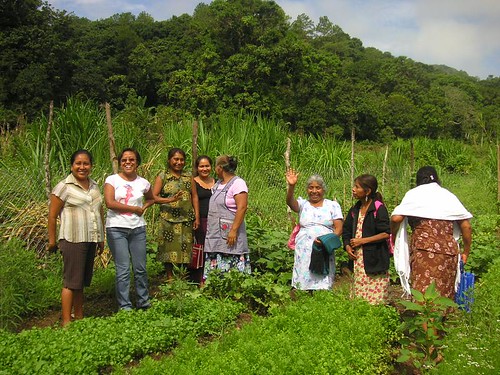
The Christian Science Monitor had an interesting article on the food crisis and how families in Mexico City are confronting rising prices with backyard gardens. "Mexico City Launches Community Gardens", provides more interesting stats on the food crisis that is affecting the world. Mexico has already put a freeze on the prices of food staples and now they are helping establish community gardens. organic gardening in Mexico with Coffee Kids and FomCafeAs I watch my own humble garden grow, I realize that the power of growing your own food isn't so much the nutrition as it is the satisfaction found in putting a seed in the ground and watching it emerge, grow and provide sustenance.Many of our partners are working with coffee-farming families to help them create small organic gardens that provide healthy vegetables and fruits and help build economic independence and health. Our program staff made some great pictures of one program managed by our partner FomCafé in Oaxaca, Mexico. Check it out at our Flickr page. And our partner STIAP, who has been working in biodiesel, is beginning a permaculture/gardening project this year to provide food for their community in rural Guatemala.
Read more…

Barista Exchange Podcast - #1

Woohoo! We now have our 1st Podcast available! I am very excited to start doing these podcasts every month or two, and will be inviting guests who have insight on the specialty coffee industry from a baristas perspective and more.

2807501816_c6362f8c80.jpg

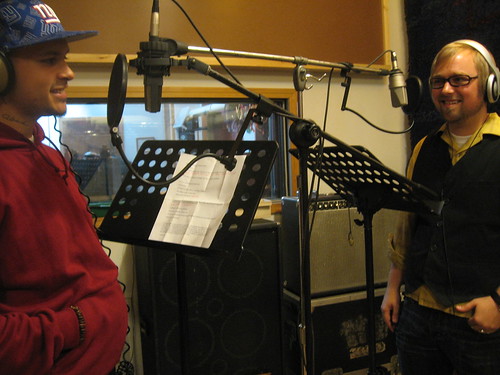
This first Podcast features Christopher Nicely Abel Alameda who works at Vivace in Seattle, WA. Christopher went on a week long Barista Exchange to Puerto Rico to work at "Barista Espresso Bar" owned by Enid Guerra, fellow bXer who recently opened her shop after attending the American Barista & Coffee School. We also discuss the Millrock Latte Art Competition coming up at Coffee Fest in a couple weeks. Podcast is 15 minutes. Click here to listen to it in full. Thanks! - Matt
Read more…

Keep quality high when sales drop

Stockton Graham & Co. publishes two biweekly newsletters, Stockton's Souvenirs and Graham's Gazette. The Gazette contains articles written with coffee retailers in mind. I'll post some of my work for the Gazette to this blog. If you like what you see, sign up for our mailing list!


You may have noticed that fewer customers are visiting your shop, and those who are still coming may be spending less. Many people are trying to save more money, and cutting out unnecessary expenses is the first step in saving. That's bad news for luxury items, but specialty coffee is a relatively low-cost indulgence that probably won't be the first thing consumers give up.

The key to retaining their business is giving them a lot of value for their money. The further a consumer's dollar can go at your shop, the more likely he is to spend it there. Below are some tips for making your customers feel like they’re getting the most for their money.

  1. Don't skimp on the good stuff. You're probably looking to cut your own costs, but make sure you aren't cutting quality. It's tempting to use cheap chocolate sauce in your mochas to save a few cents per drink, but your customers might taste the difference. If they're accustomed to getting cane sugar for $3.25, they probably won’t pay the same for high-fructose corn syrup. You could miss out on profits due to lost sales.
  2. Encourage habitual buying. Regular customers mean regular income, and they tend to bring friends and family. Reward loyalty with targeted discounts. Discounted mug refills work well with morning commuters. Percentage discounts on larger orders encourage groups. Policies like these create incentives to continue visiting your shop.
  3. Throw in low-cost extras. A dollop of whipped cream or a sprinkle of cinnamon on top of a drink can add a lot to a drink's appeal and consequently its value. Offering a free cup of drip with the purchase of a pound of whole-bean coffee would cost you very little, but to the customer, it adds another $1.50 in value to a $14.00 purchase, and that can make a huge difference in his buying decision.

If you have any questions about operating a retail coffee business, feel free to send them to info@stocktongraham.com.

Read more…

Sticky Bun Latte Recipe;

Sticky Bun Latte Recipe; Brown Sugar Cinnamon Latte2 Tbsp. Torani Syrups; Brown Sugar Cinnamon syrup1 cup milk1/4 cup espresso*InstructionsIn a small saucepan, gently heat milk and Torani syrup together, whisking until frothy. Pour steamed flavored milk into tall glass and add brewed espresso*. Spoon a thin layer of foamed milk over top of beverage.*If needed, 1/2 cup illy coffee can be substituted for 1/4 cup espresso.Discount Illy Coffee Discount Espresso Pods
Read more…

Blog Topics by Tags

Monthly Archives