Apologies if you've all read Joe McCarthy's thoughtful piece on coffeehouses and community. Here's my roundup, including a link to his full post.
Read more…
Posted by Alun Evans on November 29, 2009 at 6:30pm
The endless blue ocean that is the Arafura Sea meets Papua with a violent shudder of breaking surf on rocky beaches. Papua simply rises out of the water like some strange prehistoric animal. Ponderous, enormous, mysterious. The mountains climb endlessly, effortlessly towards the sky. These are some mountains: craggy, monumental- a darker kind of bruised and violent blue. This is a land stuck in time.And the Jungle. Having traveled all over Indonesia I thought I was prepared for what I assumed Papuan Jungles would be. These Jungles dominate the landscape, cut only by muddy ribbons of rivers that force their way from the mountains behind to the distant ocean. The jungle is impenetrable. Thick, lush, a myriad of greens and browns. It is almost inconceivable that the same country that has cleared most of Kalimantan has been unable to make any impact on the dense canopy that clings to the Southern slopes of Papua. Looking down over the millions of square miles of jungle, suddenly the fact that tribes were still being discovered here as late as the 1960's makes perfect sense. Roads are few and far between, hamlets (if that's what they can be called) are rare. This is still natures preserve. Still almost untouched by human hand.Timika, the first transit stop in Papua, has been carved out of this jungle. It is a small parcel of habitable land with impenetrable walls of trees bordering it on all sides. It literally is a city carved out the jungle. Its main reason for existence is as a base and air-link for American mining company Freeport. They have a huge copper mine operating up high in the nearby mountains. Freeport is one of Indonesia's biggest tax payers. Their contribution to Papua is the infrastructure that makes up Timika as well as projects around the rest of the Island.After a quick 30 minute stopover, the flight continues to Jayapura- the capital of Papua. Jayapura was described once to me as being like a “Kebon Singkong” (a sweet potato field) during the day, and like Hong Kong at night. There is no doubt that this city is a small slice of Paradise. It is located on a deep water bay, the inhabitants living on houses over the water and also built right up the sides of the mountains that surround the town. The Jungle snaps at the outskirts of the city, a thick green and blue belt of trees tied tight around the inland perimeter. The view seaward is of islands and the smoky grey outline of Papua New Guinea. PNG is a mere 70km from Jayapura, not more than a couple of hours drive.While the rugged geography maybe similar to that of Hong Kong, Jayapura is no Causeway Bay. The tallest building in the city is the towering 6 storey Bank of Papua. The Swiss-Bell Hotel and several other buildings top out at 5 stories. At one end of town is the Port and the area known as Dok I. At the other end, Police Barracks and Dok IX. In between there is an army base, commercial centre, fish market and the soccer stadium - home to Indonesia's 2008/9 champion soccer team. The city is not huge, but vibrant. This is a melting pot of different cultures and different religions. Immigrants from South Sulawesi- Bugis, live hand in hand with Javanese and local Papuans. Churches- many Catholic, are everywhere. A large Cross, illuminated red at night, stands atop the peak overlooking the city. Another- this one yellow, guards the wide entrance to the harbour. Power is supplied by a saddly dilapidated and spluttering diesel fired powerplant at Dok I. Its poor performance means nearly every major building- hotels, cafes, restaurants, government offices and hospitals- have their own generators on site.One of the major daily habits of local Papuan's is endlessly chewing Betel nuts. Betel nuts, or Pinang as they are known in Indonesia, used to be a fruit that was the bane of British Governers everywhere. The nuts were chewed and spat out in a gooey mess in cities including Hong Kong, Singapore and Kuala Lumpur. Pinang itself is green and about the size of quails egg. The customer pops the entire fruit in their mouth and begins chewing like mad. It is crunchy, hard and oozes out a acrid and bitter flavor. The juice of the fruit stimulates the saliva glands- the chewers mouth quickly fills with liquid. This is regularly spat out and between chews the consumer eat chalk dabbed in a sirih stalk. The chalk helps to balance out the acidity in the mouth. The betel nut has a strange effect. It is for sure a stimulant and also it creates a numbing effect in the mouth. The local Papuans think it is also an excellent way to reduce gum disease. It is pretty easy to spot a Betel nut eater- the bright red juice mixed with saliva would make an excellent prop for the “Twilight” cast of vampires. Blood red teeth, gums and an occasional chin drizzled and splotched crimson. The streets of Jayapura look like they have been sprayed with blood!End Part 1
Read more…
Greetings Coffee-Lovers! I really need your help! If you have 3 spare minutes to fill out a super-brief survey, you could likely win a $50 Amazon gift card! Sounds good, right? Technically, that's $16.67 for each minute of your time!My team of 5 undergraduate business students are studying the coffee industry and we need cafe owners who have purchased espresso equipment to help us analyze that buying process & a couple of other questions. If you choose to fill out the survey, you will then be entered into a drawing to win a legit $50 Amazon gift card. PLEASE help! We are weary students who need data to analyze; the source: possibly YOU!Click Here to take surveyRead more…
Posted by Coffee Kids on November 25, 2009 at 9:31am
Looking for the perfect greeting card this holiday season? Thanks to Urnex for underwriting the printing, we have Coffee Kids holiday cards available. The cover features a beautiful image of a coffee plant by photographer Dorie Hagler from her photo documentary, Behind Every Cup.A set of ten (10) Holiday Greeting Cards costs $15 plus shipping and handling. (Inside message: Wishing you a peaceful holiday season and prosperous New Year!) Contact us to place your order at 505-820-1443 or info@coffeekids.org.
Read more…
Posted by Bryan Wray on November 24, 2009 at 11:10pm
Blog PageAs the majority of the country starts to save up for the Holidays, I’ve started saving right along with them, but for a completely different reason: I’m moving to the West Coast.I’m truly excited about the move. Sure it’s a fresh start in a new city, with new people and new surroundings, but that’s not my main reason for excitement. I’ve never felt truly challenged as a barista before, and I am anticipating this new store and new boss to completely kick my butt when it comes to being challenged. In the past I would challenge myself to get better and better everyday, but I never found myself really pressed to improve my skills from any of my co-workers or bosses in the past. It’s not that they were poor workers, it’s just that there is a difference between a barista and a career barista. There is always something to learn, and in the past helping to challenge, teach and train my fellow baristas was always something that helped to advance my knowledge of the craft, but I never felt challenged back. Although there was pressure, it was not the same as direct attention from someone that cares as much or more about the quality of coffee than you do. I’ve never felt intimidated before, and now I do. It’s a strange feeling to be excited about intimidation. To be overjoyed about being forced to push your limits. I’m actually looking forward to no longer being a standout.As I move to new shores and a new coast, I’ll have to let go of the coast and coasting that came with this Michigan shore that I have come to love for so long. When I walk into work from now on I’m not going to throw lingo over people’s heads if I start talking about coffee beyond “light roast and dark roast.” I’m moving to a shop where people can pull flavors out of a coffee in the same way I try to. I’m moving to a shop where people challenge themselves to become better everyday, just like I have done for so long.It will be nice to be in like company.18 days.
Read more…
Posted by Eyal Rosen on November 24, 2009 at 7:15am
We are thrilled to feature on ROASTe Kickapoo Coffee. Roast Magazine 2010 Roaster of the Year!Check them out here: http://bit.ly/6ZlC3FEyal /ROASTe.comRead more…
I blogged on this after a customer asked this question this week. She had been told that Good coffee will never need sugar. Read below and tell me what you think....A great customer of Star Gardentown Cafe - Toowoomba - was told that ‘good coffee does not need sugar’, is this true? I have to say that there is no definite answer to this one. There are times where it is a well defined ‘Yes’ and others where you wouldn’t dream of it. I guess the first question that needs to be answered is - are you putting sugar in your coffee to mask an undesirable flavour? - If this is the case, find somewhere else to buy your coffee, or learn to make it the right way!So, are you putting sugar into it just mask an undesirable flavour? If so there may be a few reasons. Has that coffee shop that you frequented for a long time one day dropped the ball in terms of the quality of coffee they serve? The biggest mistake is blaming the coffee itself. Rarely will the coffee be bad. There is a roaster somewhere that put alot of love into that blend and somewhere along the line, a barista or staff member has dropped the proverbial ball and ruined what might have been great.Take Di Bella coffee for example. They have just taken great honors in Australia’s Golden Bean awards for 2009, yet, one of my local cafes makes their coffee taste like the worst coffee ever made! The poor roaster has no control when he/she sells the beans, yet would go out of business if they refused to supply any cafe that didn’t do them justice. The making of the coffee in your local cafe is only the small final step in a much larger history in your cups life. The process - Grown, picked, fermented, sorted, bagged, shipped, roasted, blended, shipped to the cafe, ground, extracted and drank, - is lengthy enough that somewhere along the line something can foul the end result. You will find that in the roasting process, no faults should be detected and then passed on to the consumer. A good roaster will never roast a sub-standard green bean and pass it onto their customers. Likewise, a good roaster will frequently ‘cup’ their coffee to ensure that the end result in their roast is what they expected.So what can a barista/cafe stuff up? - Heaps - There is literally tons of ways to ruin a good bean in the final stages of making a coffee.* Is the whole bean stale? Does your cafe buy too much or not sell enough. Is it sitting on the shelf for way too long, it is exposed to excess amounts of air?* Once ground is it getting used straight away? Think about it - Once ground, there is A LOT more surface area for air to contact and start the deterioration. A good barista will grind to order, giving you the freshest tasting cup.* When was the espresso machine cleaned last? This would have to be the biggest fault in why your coffee is bitter, and hence why you need to sweeten it with sugar! Cleaning with chemical over night is essential (domestic machines don’t need this frequency), back flushing the system hourly if not more and cleaning up as mess (washing out equipment) is made can alter the flavour of the cup. A messy machine will kill your coffee.* How long did the extracted shot sit around until it got drank/milk poured into it? Time kills as well. and,* How long was the actual extraction of coffee? Did the barista really know what they were doing when they started making your drink?So these things - plus a whole lot more - can ruin you cup of Joe in a cafe but espresso coffees are only one way of making a good cup. What other factors can make you add sugar in the home or through other processes like siphons/plungers etc?….‘Good coffee ‘ is a wonderfully diverse medium that knows no limitations. Major factors like what extraction method - Espresso, siphon, plunger, pour over etc - will usually dictate what sort of origins of coffee are used in the process. Different countries, broken down into regions and further into farms will produce unique flavour profiles somewhat like wines. Some origins may produce naturally sweet flavours, some dry. Others will be sour and yet still some can be combinations. An African coffee can be really sweet (Ethiopian Yirgacheffe, Kenyan AA) and not need any sugar as they have distinct floral and fruit nuances. In saying that though, an African coffee might give you an intense explosion of these flavours with just a small amount of sugar added. Extract an African coffee through an espresso machine and you will draw out a lot of the beans acidity making it tart on the tongue. Extract the same bean through a siphon or pour over and all that ‘pop’ of acidity will be mellowed and almost non existent, giving you great floral nuances as the beverage cools down.So, to answer Yes, to the question posed, some coffee’s like African coffee’s can be good with a bit of sugar. Just like a good chef always seasons food with salt and pepper to draw out natural flavours, a little sugar can increase the pop of flavour on your tongue when drinking coffee. A good chef will adjust the seasoning to sit the dish, adding more at the table before even tasting can tip it over the scale and start to ruin the flavour. If you are in a good coffee shop, trust your barista and try the coffee first, they might know that the blend they are using is great as it is, that milk enhances the flavour and that sugar will drown out the delicate nuances that await your palate Being that you picked a good coffee shop as well, chances are that the same barista loves what he does and he cleans his machine and knows what he is doing. Don’t pass judgment on a coffee before you taste it, sip it without added sugar first and then adjust accordingly.If you happen to be a extra tall, extra caramel, half shot coffee drinker, than chances are sipping on an espresso shot will taste awful. Intensity of flavour is obviously going to alter your preference to the final cup you drink. A good barista will know if his/her blend goes better in milk based drinks compared to straight shots. We at Star Gardentown Cafe try to offer alternatives for espresso drinkers. We know that we designed our blend for the 80% of our customers that drink milk based beverages. Therefore, we offer single origins and blended alternatives for the coffee geeks drinking it strong and black.In the end it comes down to personal preference. The biggest advice we can give though, is that if you are getting a coffee that requires more than one sugar, either find another another shop or learn to cut down on your sugar intake. Who knows, you might enjoy the flavours that you are masking (and cull your dentist bills). So, does good coffee need sugar? - Yes if you want a small amount to help draw out natural flavours, - no, if you are just using it to mask terrible coffee.
Read more…
I just read a story that illustrates quite well the battle some of us face by choosing to serve only the highest quality products like not using airpots.Washington, DC Metro Station on a cold January morning in 2007. The man with a violin played six Bach pieces for about 45 minutes. During that time approx. 2 thousand people went through the station, most of them on their way to work. After 3 minutes a middle aged man noticed there was a musician playing. He slowed his pace and stopped for a few seconds and then hurried to meet his schedule.4 minutes later:the violinist received his first dollar: a woman threw the money in the hat and, without stopping, continued to walk.6 minutes:A young man leaned against the wall to listen to him, then looked at his watch and started to walk again.10 minutes:A 3-year old boy stopped but his mother tugged him along hurriedly. The kid stopped to look at the violinist again, but the mother pushed hard and the child continued to walk, turning his head all the time. This action was repeated by several other children. Every parent, without exception, forced their children to move on quickly.45 minutes:The musician played continuously. Only 6 people stopped and listened for a short while. About 20 gave money but continued to walk at their normal pace. The man collected a total of $32.1 hour:He finished playing and silence took over. No one noticed. No one applauded, nor was there any recognition.No one knew this, but the violinist was Joshua Bell, one of the greatest musicians in the world. He played one of the most intricate pieces ever written, with a violin worth $3.5 million dollars. Two days before Joshua Bell sold out a theater in Boston where the seats averaged $100.This is a true story. Joshua Bell playing incognito in the metro station was organized by the Washington Post as part of a social experiment about perception, taste and people's priorities. The questions raised: in a common place environment at an inappropriate hour, do we perceive beauty? Do we stop to appreciate it? Do we recognize talent in an unexpected context?One possible conclusion reached from this experiment could be this: If we do not have a moment to stop and listen to one of the best musicians in the world, playing some of the finest music ever written, with one of the most beautiful instruments ever made.... How many other things are we missing?
Read more…
One day it seems the shelves at the grocery store across the street where we sell our Sasquatch coffee are full. A customer just came in to our store and told me there is a one Jar of coffee left and a couple of bags. What is up. Don't get me wrong it's all good. When it rains here in Stevenson Washington it pours. Not just rain, which by the way it is dumping out side right now just as the Farmers Almanac predicted. I digress.I'm a coffee roaster. I roast with a Probat 5L or a 10lb capacity, roast or cool. Not both at once so it takes awhile to get some beans out and on any one's shelf. If things keep going like they are I'm going to need that 3K USRC sooner before later. miKe M. sold me on it some time ago. The 1976 refurbished Probat is beautiful site but not made for prime time. 15L is a mim. to do commerical work. Or my choice will be the USRC. Time to put a fire in the baby and put some color on these greens we have. Lets see, eeeny minnne, mineee, Africa, Peru, Sumatra, Brazil, Guat, Nic, Crazy Ladies blend, Yeti blend, Too many choices.Jose' Javaho--Ambassador for Specialty Coffee and palate reform.
Read more…
Lets see I'm working or was working / on my feet , 7 days a week 14 hours a day....Now I'm down to 6 days or there abouts....A little time now for sales and marketing...YES the fun part....
Read more…
From November 10th till 12, the first national Barista Championship of UAB took place during the Specialty Coffee and Tea Convention 2009 at the Al Bustan Rotana Convention Centre in Dubai. The baristas had to pass a preliminary round and the best six classified ones passed to the final on November the 12th. An international judge team was responsible for the evaluation, Head Judge was Scott Conary and among the international judges team we could find Ben Bicknell, Sonya Grant, Ellie Matuszak, John y Pauline Sherwwod, Johanna Wechselberger y Adib Maksoud. The final classification ended up as follows:1. Vikram Kashyap2. Kim Thompson3. Raja Muthusamy4. Romeo Perello5. Marjorie Briones6. Roselyn CorderoThe champ will take part at the World Barista Championship in London in 2010. The audience was great and even a video was posted on the internet version of a newspaper - The National Newspaper. You can have a look at http://www.thenational.ae/apps/pbcs.dll/article?AID=/20091112/MULTIMEDIA/911129973/1239Read more…
Posted by Coffee Kids on November 18, 2009 at 9:42am
By José Luis Zárate, Coffee Kids International Program DirectorIn mid-October, I visited our partner ICSUR in Chiapas, Mexico. Men and women there are learning to raise chickens and edible mushrooms and to utilize traditional medicine for common illnesses. Their edible mushroom project, which was financed by Coffee Kids in the past, became completely self-sustaining last year. It was great to see how that project has grown and how families have moved onto new projects to diversify income and provide for better health care and food security.For seven years, ICSUR has collaborated on a number of projects with indigenous communities in the Zoque region. The technical staff at ICSUR does an impressive job of maintaining excitement for the projects while respecting the preferences and priorities of the communities.They have helped them solicit government funding for local infrastructure and technical staff who support and advise on the cultivation of coffee in the region. Their coffee is sold under the name Cooperativa Federación Selva Negra. Some of ICSUR’s most important work in this area has been helping families create alternatives to coffee and bolster economic independence.Given the global economic crisis, this year has been especially difficult for Selva Negra. The government has stopped offering financial support for technical staff and the fees associated with coffee certification. Besides this, coffee buyers have had to cancel two large coffee contracts and coffee was sold for national consumption instead of for export. Many families suffered a heavy loss.In moments like these, many families not only suffer a loss of income, but also lose motivation to continue farming coffee. The economic woes have convinced many families of the importance of economic diversification and more and more of them are taking advantage of Coffee Kids-supported projects in chicken-raising and traditional medicines.ICSUR is working with the families to reach their goals so that they can continue farming coffee without being completely dependent on it.Read more about ICSUR’s efforts and see photos on our Flickr page.
Read more…
Posted by Wendy Coulter on November 17, 2009 at 12:48pm
FOR IMMEDIATE RELEASEcontact: Jeff Vojta, Presidentcompany: Stockton Graham & Co.phone: 919-881-8271email: vojta@stocktongraham.comStockton Graham & Co. Launches Blog for Coffee and Specialty Beverage RetailersNovember 16, 2009 – Raleigh, NC - Stockton Graham & Co. today announced the launch of its blog, “Graham’s Gazette”, at http://stocktongraham.wordpress.com/. The blog is dedicated to providing detailed information and discussion on coffee, specialty beverages, equipment and training targeted to coffee houses, QSRs, start-ups, hospitality venues, grocery stores, offices and franchises.Stockton Graham & Co’s “Graham’s Gazette” blog features posts about operations, like “What brings your coffee customers back for more” and “How to hold a mini open house or tasting event”, as well as menu advice like “How to introduce a new product to your menu successfully” and recipes. You can also find tips of the trade, featured coffees and specialty beverage products, seasonal offerings and event highlights. The blog also features an RSS feed of email blasts from the company with even more relevant content and offers.Stockton Graham & Co. has also launched pages on both Facebook (http://www.facebook.com/pages/Raleigh-NC/Stockton-Graham-Co/186965004898) and Twitter (http://twitter.com/StocktonGraham) to embrace the internet and social media as a way to reach out to customers with information in the most timely and effective way possible.“We continue to find innovative ways to help our customers access the information they need to run their specialty coffee business in this challenging business environment,” said Jeff Vojta, President of Stockton Graham & Co. “Launching this blog, as well as reaching out through Facebook and Twitter, is tied into our mission to help create a stronger sense of community within our industry, and reflects our dedication to the highest level of customer service and information sharing.”For more information about Stockton Graham & Co.’s specialty coffee and services, please visit www.stocktongraham.com or call 800-835-5943.________________________________________About Stockton Graham & Co.:Founded upon craft-roasted coffee, Stockton Graham & Co. is a wholesale specialty beverage, equipment, and accessory supply company. We provide high-quality, custom-roasted coffees, gourmet teas, and specialty beverage products along with turnkey services to coffeehouses, restaurants, smoothie bars, health clubs, specialty groceries and natural food markets. From coffee to smoothies, and training to equipment sales, Stockton Graham and Co. enables retailers to serve fresh, custom-roasted coffees and to create distinctive drinks for discriminating guests, enhancing their ability to bring people together in a comfortable atmosphere.###
Read more…
What is cupping?Cupping is the industry term used for the process of analyzing a coffee based on its sensory qualities – for example, its aromas and flavors. For our cuppings at Equal Exchange, roasted samples of coffee are divided into six different glasses of equal amount and grind size, steeped with hot water (198 to 205 degrees), and slurped (or aspirated) from a spoon for about 35 minutes.Aspiration is the process of slurping a beverage across the tongue with force, in a way that introduces air into the mouth and sprays the beverage across all parts of the tongue rapidly. If you've ever heard or seen a wine expert doing a tasting, this is the same method they use. Aspiration also forces the coffee’s aromatics up from the back of the throat to the olfactory bulb (a part of our brain that sits behind our eyes and is responsible for processing scent). Everything we taste is affected by its aromatics, making flavor and aroma intrinsically linked. Each coffee is graded based on the quality of their aroma, flavor, mouthfeel, acidity, balance, cleanliness and aftertaste.AromaThe olfactory bulb is the part of our brain that processes scent. Aromas reach the nerves of the olfactory bulb via two routes: 1) through the nose, nasally, and 2) through aromas rising up to the bulb from the back of the throat, what we refer to as retronasally.In cupping, we analyze aromas in three different stages.* The dry stage: when we smell the dry, ground, roasted coffee in the cup.* The crust stage: when we smell the "cap," of the coffee as it is steeping.* The break: when we break the cap after four minutes of steeping and smell the release of the aromatics that were trapped underneath the cap.FlavorIt may be surprising to find out that there are only five basic flavors: sweet, sour, salt, bitter, and umami. You’ve probably heard of the first four. “Umami” was only recently identified as the fifth flavor; we won’t focus on this one in the manual. (All other flavor sensations beyond these five are actually aromatics.)* Sweet. This one is pretty familiar - think of sugar.* Salt. Think of the way table salt tastes.* Sour.Think of lemon or vinegar.* Bitter. Think about baking cocoa, tea that has steeped too long, or aspirin.Coffee can, and often does, exhibit all of these flavors, and part of the joy of cupping is how they interplay on your pallet.AcidityAcidity is best described as the bright and zesty sensation found in coffee. It can range in intensity from low (gentle) to high (striking), depending on the origin, cultivation, processing and roasting of the beans. Important to note is that the acidity described in coffee is actually "perceived acidity" and is not related to the pH of the coffee itself; coffee has a pH of 5.7, which is similar to white rice or beer (a pH of 7 is neutral).Beyond the intensity of the perceived acidity in coffee, there are also several different types of acids present that we pay special attention to:* acetic acid (like vinegar)* citric acid (like lemon and other citrus fruits)* malic acid (like apples)* quinic acid (which is slightly bitter, like the quinine in tonic water)* phosphoric acid (like carbonated beverages or cola)* lactic acid (like the sour flavors in dairy products - sour cream for instance)MouthfeelMouthfeel can be described as the perceived thickness of the coffee on our pallets. Thin coffees have low mouthfeel, and thick coffees have high mouthfeel. Imagine for a minute the difference in thickness from skim milk to whole milk, or from light maple syrup to molasses. When we grade coffees, we grade based on both the quality of the mouthfeel and its intensity. Some coffees can have high mouthfeel, but may also be gritty and granulated. Likewise, some low mouthfeel coffees can be very smooth and satiny.CleanlinessCleanliness in cupping can be described as the absence of defects and inconsistencies in a coffee sample. If the coffee was processed correctly it should have a refined taste. Some of the defects that may be found in coffees are over-fermentation (of fruit flavors), phenolic (chlorine-like flavors), Rio (iodine-like flavors), earthy flavors (like dirt or soil), and many others. Some defects are so intense that just one defective bean can negatively affect the flavor of an entire pot of coffee.BalanceThis is, quite simply, how well the coffee’s different attributes intermingle. Is one aspect of the coffee too intense, like acidity? Or does the sweetness of the coffee blend well with the mouthfeel? After focusing on each individual attribute of the coffee during cupping, the balance category can be helpful for getting a cupper to look at the coffee as a whole.AftertasteAftertaste is a little easier to understand than acidity or mouthfeel. Essentially we focus on the qualities and flavors left on our pallets after the coffee has either been spit out or swallowed. Is the aftertaste similar to the flavor of the coffee when it was on your pallet? Has it gotten sweeter or bitterer? Is it prolonged or does it slip away?Production CuppingBeyond being responsible for analyzing the coffees we are looking to import, our Quality Control (QC) team does many other things to make sure that our coffee is of the highest quality. Production cuppings are an important aspect of the day-to-day in the QC lab. Every day the QC team joins forces with members from the roasting team to cup all of the production roasts from the day before. In doing so, we know how our coffees taste over time, we are able to check for problems with the beans themselves, and we are able to easily keep track of how the beans are roasting. From the time we start roasting a lot of coffee (one lot equals 37,500 pounds), to the time we roast the last batch, we will have cupped that coffee upwards of 100 times.
Read more…
 Looking for the perfect greeting card this holiday season? Thanks to Urnex for underwriting the printing, we have Coffee Kids holiday cards available. The cover features a beautiful image of a coffee plant by photographer Dorie Hagler from her photo documentary, Behind Every Cup.A set of ten (10) Holiday Greeting Cards costs $15 plus shipping and handling. (Inside message: Wishing you a peaceful holiday season and prosperous New Year!) Contact us to place your order at 505-820-1443 or info@coffeekids.org.

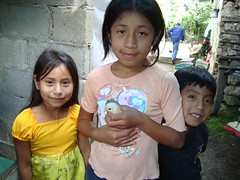 For seven years, ICSUR has collaborated on a number of projects with indigenous communities in the Zoque region. The technical staff at ICSUR does an impressive job of maintaining excitement for the projects while respecting the preferences and priorities of the communities.They have helped them solicit government funding for local infrastructure and technical staff who support and advise on the cultivation of coffee in the region. Their coffee is sold under the name Cooperativa Federación Selva Negra. Some of ICSUR’s most important work in this area has been helping families create alternatives to coffee and bolster economic independence.
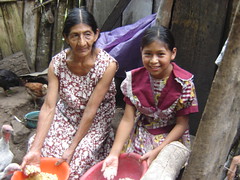 Given the global economic crisis, this year has been especially difficult for Selva Negra. The government has stopped offering financial support for technical staff and the fees associated with coffee certification. Besides this, coffee buyers have had to cancel two large coffee contracts and coffee was sold for national consumption instead of for export. Many families suffered a heavy loss.In moments like these, many families not only suffer a loss of income, but also lose motivation to continue farming coffee. The economic woes have convinced many families of the importance of economic diversification and more and more of them are taking advantage of Coffee Kids-supported projects in chicken-raising and traditional medicines.ICSUR is working with the families to reach their goals so that they can continue farming coffee without being completely dependent on it.Read more about ICSUR’s efforts and see photos on our Flickr page.
