Great new spot in shanghai, no signs, no advertising, just great and unpretentious coffee. Chinese owner, great space and super friendly. Just happened to walk by and stopped in, stayed for 2 hours and chatted with the owner.
All Posts (1817)
Sort by
Is it enough to have a friendly face and smile for each order or should we go further for customers? its always been the job of the marketing team to push the image , service and products of Cafe's , Roasters , and Bistros . I grew up in cafes and tasted the best of service and the worst and i found that if staff are not excited about there job title or just do the job cause they need a job. This affects the Customer consumption perception of the SHOP , the PRODUCT and the PRICE and STAFF attitude towards the coffee consumption shopping effect.
As a result one can be the best barista and make awsome drinks to blow customers taste buds , but they get LITRILY BLOWN AWAY and never come back then do after shop damage by going across the street and sounding off to potential customers .
Shouldn't we build more customer relationship marketing and consumer analytics into barista and staff skills and trade craft content into training
P
We envisioned starting a coffee truck business but have decided to go in a different direction. We have two commercial Bunn G3 HD Black grinders, two Newco Barista Series coffee machines, one Schaerer Ambiente Power Steam with cards for retail use for sale.
All equipment is in excellent shape and works flawlessly.
The Newco's retail around 1000.00 each, the grinders around 700.00 each, and the Power Steam around 14,500.00. We are located in Illinois. We will accept all reasonable offers and answer any questions at amccauley3@aol.com.
The consumer-product relationship is broken. Just think – walking into a store - there is no real interaction between you and the products on the shelf? For most of us it is a simple “Hmm this looks good, I’ll take it.” and throughout consuming the item, nothing new about it is really ever learned. We seek to revolutionize this experience by allowing you – from the moment you first see the product on the shelf to your last interaction with it – it adds value & color to your life.
When we saw this gap, we started Coffee Match – changing the buying & consumption experience around Coffee.
Revolutionizing the way we consume Coffee & Tea
We are both passionate about technology and wanted figure out a way to use it to create an experience around Coffee & Tea. To create an experience – we started thinking about what kind of content would add value to the consumption.
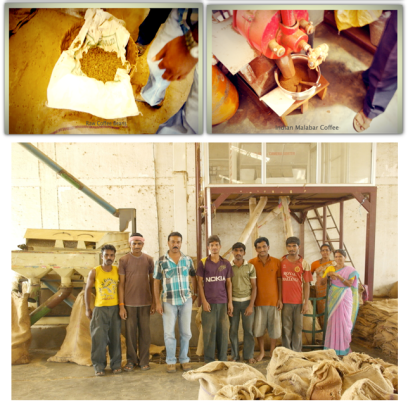
To start…You want to know where it comes from, who is responsible for making it. Next to really spice things up – experience it with your own eyes. Meet the farmers, the local roasters, understand how its locally consumed, what is interesting about the Coffee/Tea drinking culture, & impacts around the production of this beverage.
And that’s exactly what we did. We went to India to accomplish this.

Our First Journey: South India
Our trip in India was incredibly insightful. Most of the amazing Coffee in India is grown in a region known as Coorg which is about 3-4 hours away from any major city. On our journey to Coorg, we realized we were stumbling across amazing locations filled with interesting people & an amazing culture. We started to see how the Coffee & the culture fit together.
It was a surreal experience of how we initially began the trip to find this amazing Coffee, but in the process of doing so – we ended up with so much more. From learning local recipes, understanding how the Coffee is supposed to be made, listening to local music, meeting the local developer community, picking small bits from the language – how it all came together to change our perception of what Coffee & Tea really is.
So we want to bring this experience back – package it in a way from the first sip to the last sip – you feel you’ve been there.
The future of Coffee & Tea:
Once we came back home, we realized we had an opportunity to expose the world to interesting cultures through their daily interaction with Coffee & Tea – a seamless way to consume information while enjoying a delicious beverage.
So we built an app as prototype that pushes all the of the content that we gather while sourcing the coffee/tea from that destination & delivers in a seamless way to the end customer from the moment they see the product at the store.

For instance, meet the farmer with a quick snap – you can see the actual farmer who made it & the raw coffee/tea in his/her hand right on the store shelf. Watch it in action.
And through the process of drinking the coffee/tea until the last sip – we push interesting content through directly to you.
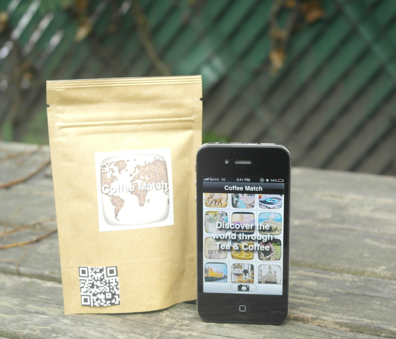
Creating an experience around products
Our vision is at the store – walking into an aisle – is much more interesting & interactive. The products are alive. You’re not buying a product, but you’re buying an experience.
We just launched our Indiegogo & we’d sincerely appreciate your support in changing the way we consume coffee forever.

My dad and my brother call me and ask to join them on a trip to a Goodwill nearby. I figure, "So you want me to help you carry the heavy stuff? Yeah, no problem. Dad's too old for all that anyway. Sure, I'll go." As it turned out, there was really nothing I was interested until I began walking down the dishes/kitchen aisle. Then lo and behold...an espresso machine! A two group Avanti in black finish. It looked like a "pro-sumer" machine reminiscent to the Nuova Simonelli Oscar, but older. Thirteen bucks? I wonder if it works, I thought. If doesn't work? Hey, it's only thirteen dollars, BUT if it does...wow. Two hours of cleaning & descaling later and ....bada-bing, bada-boom! Espresso with crema and nicely frothed milk. Wooohooo!
Ok, so far these are the profiles we discovered and enjoyed, described as best as we can put it for each coffee (we went through four):
The Brazil Mogiana: heavy bodied and thick, cinnamon in the aroma, lime and pulpy fruit on the tongue with a powdery, full aftertaste. not too sweet or winey, but well balanced all the same. Nathan's fav!
The Java Sunda Candra Wulan: light-bodied, bright and dynamic with toasted macadamia nut hinted in the aroma, salty and tangy on the tongue, overall a very vibrant and intriguing cup.
The Burundi Kirimirroo Teka: dark chocolate notes in the aroma, medium bodied, honey, almond and milk chocolate in the aftertaste.
The Burundi Yandaro: vanilla and butterscotch hinted in the aroma, lighter bodied than the first Burundi, really mellow with definite dark chocolate notes.
Wow- what a refreshing two hours. It really flew right by! Its so therapeutic to sit and sip and think about what your senses are experiencing. We can't wait until next time!
-J
I can write whatever I want. WHATEVER. I. WANT.
You cannot stop be! I mean "me"! I'm too excited to hit backspace and correct typos!
Right now I'm drinking raspberry tisane, and it is delicious!
Sustainable Seafood: 4 tips for choosing an ocean-friendly catch
As warm weather rolls around, you may be daydreaming about clam bakes, grilled salmon, and long days on the beach. But do you know if the seafood on your plate is sustainable? | Read more
"Your Actions Affect Me"
"Generation Climate" is a blog series that gives voice to those who will experience the brunt of climate change: young people. Cailin Sullivan, a NativeEnergy intern from Middlebury College, contributed this post.
When I returned from the library last Sunday night, a debate was raging, per usual, in the living room of my tiny house on the edge of campus. Adam, our hard-headed econ major, had his iPhone out and was furiously fact-checking as he gesticulated at Jared, a sociology major. The topic wasn't the merit of a Skyfall or the don't-go-to-law-school argument that occurs weekly as we get closer to graduation--it was global warming. | Read more
Coming to grips with climate change
"Ours is a world in which a flood in Thailand can cut off global supplies of computer disk drives for the better part of a year; where a record-low Mississippi River can choke the flow of commerce; where an unprecedented hurricane (or "superstorm") can upend one of the world's financial centers for weeks. In that context, how should a company view climate change, renewable energy, and resource efficiency?" | Read more
TriplePundit names NativeEnergy to list of "Top 25 Sustainable Brands on Twitter"
Twitter is often viewed as the social media site for celebrity news and fleeting updates, but behind this image lies a strong community of CSR leaders. Through a networked series of Twitter accounts, executives, reporters, and engaged customers connect and share their knowledge of sustainability best practices. | Read more
Microsoft takes carbon accounting to a new level
Microsoft has implemented a companywide system to charge each of its departments for the carbon emissions associated with their data centers, software development labs, offices, and employee travel. | Read more
NativeEnergy and GreenBiz report CO2 emissions for the 2013 GreenBiz Forums
NativeEnergy has calculated the greenhouse gas emissions for the 2013 GreenBiz Forums hosted in New York City and San Francisco. As the official carbon offset sponsor, NativeEnergy is donating high quality carbon offsets to balance 184 metrics tons of emissions from venue energy use, attendee travel, and hotel accommodations. | Read more
About NativeEnergy
NativeEnergy is an expert provider of carbon offsets, renewable energy credits, and carbon accounting software. With NativeEnergy’s Help Build™ offsets, businesses and individuals can help finance the construction of wind, biogas, solar, and other carbon reduction projects with strong social and environmental benefits. Since 2000, NativeEnergy’s customers have helped build over 50 projects that are now keeping millions of tons of greenhouse gases out of the air. All NativeEnergy carbon offsets undergo third-party validation and verification. Learn more at www.nativeenergy.com.
SUMMARY
Fair Trade USA announces that Fair Trade Certified coffee imports and premiums hit an all-time high in 2012.
PRESS RELEASE
Fair Trade USA, the leading third-party certifier of Fair Trade products in North America, today announced that Fair Trade Certified™ coffee imports hit an all-time high in 2012: 163 million pounds were imported into the United States and Canada, representing an 18 percent increase over 2011. This growth, driven by Fair Trade USA’s more than 400 coffee importing and roasting partners, helped farmers and workers earn an additional $32 million in Community Development Premiums. These Premiums, owned and managed by Fair Trade producers, are invested in much-needed projects, including medical care, environmental conservation, access to clean water, quality and productivity, scholarships for children and adults, and agricultural training.
Fair Trade USA also brought on 60 new importers and roasters in 2012, and 50 new Fair Trade Certified coffee products were launched. Existing partners also ramped up their support of Fair Trade in 2012:
- Green Mountain Coffee Roasters, Inc. (GMCR) recently converted one of its best-selling coffees, Green Mountain Coffee® Nantucket Blend®, to Fair Trade Certified™.
- Allegro Coffee announced plans to convert its Ethiopian Blend to Fair Trade Certified in 2013.
Due to this record growth in volume and imports, Fair Trade USA is on track to double the impact of Fair Trade for farmers and workers by 2015—a goal outlined in the organization’s 2011 Fair Trade for All innovation initiative. To support this continued momentum, in 2012 Fair Trade USA focused on three key areas necessary to increase the scope, impact and relevancy of Fair Trade for everyone in the supply chain:
Strengthening Farming Communities
To help cooperatives increase competitiveness and build resilience in the face of critical market challenges, Fair Trade USA:
- Launched a Cooperative Small Grants Program, from which $60,000 was awarded to small-scale coffee producers to invest in quality and productivity; one grant specifically focused on rust management and prevention.
- Organized eight “Intercambio” events in Latin America and Indonesia, connecting hundreds of cooperatives with U.S. buyers, lenders, and NGOs.
- Sent bi-weekly coffee market updates to all Fair Trade producer organizations, helping them stay abreast of market trends for optimal negotiating power.
Including more People
Fair Trade USA is keenly focused on expanding the scope and impact of Fair Trade certification. Progress from 2012 includes:
- The number of coffee producer organizations from which Fair Trade USA’s North American partners sourced grew 23 percent, to 221. Of this group, 99 percent were cooperatives.
- Fair Trade USA began exploring certification for coffee farm workers and independent smallholders, groups previously excluded from participating in Fair Trade. Twelve pilot farms were included in this exploration (four of which were certified), representing 4,300 farmers and farm workers in Latin America, Asia and Africa.
- A comprehensive, independent Impact Assessment Process was developed to track and analyze the impact of new groups entering Fair Trade.
Engaging Consumers
Building awareness and demand for Fair Trade Certified products in the marketplace is critical for increasing impact for farmers. In 2012, Fair Trade USA:
- Educated more consumers about Fair Trade than ever before through its Fair Trade Month campaign in October, which resulted in over 100 million impressions through a variety of digital and social media tactics.
- Fair Trade Campaigns, a grassroots organization housed by Fair Trade USA, saw a 21 percent increase in participation in 2012, with a total of 76 Towns and 62 Colleges & Universities now promoting Fair Trade products at the local level.
“Fair Trade USA is proud of all that we’ve achieved with our partners in 2012. Still, there is opportunity to provide so much more impact to many more farmers and workers,” said Jennifer Gallegos, Fair Trade USA’s Director of Coffee. “While coffee imports grew almost 20 percent last year, Fair Trade makes up just 5 percent of the U.S. coffee market. That’s why we’re focused on increasing the value and relevancy of Fair Trade, and ensuring that people-- farmers and workers-- are at the heart of every company’s sustainability strategy.”
###
Fair Trade USA, a nonprofit organization, is the leading third-party certifier of Fair Trade products in North America. Fair Trade USA audits and certifies transactions between companies and their international suppliers to help ensure that farmers and workers are paid fair prices and wages, work in safe conditions, protect the environment, and receive community development funds to empower and improve their communities. Fair Trade USA also educates consumers, brings new manufacturers and retailers into the Fair Trade system, and provides farming communities with the tools, training and resources to thrive as international businesspeople. Visit www.fairtradeusa.org for more information.
Contact
A picture really is worth a thousand words when it comes to restaurant marketing. Instagram is a mobile app that was created in 2010 and has gone viral throughout the world. It is a fast and fun way to share pictures with beautiful filters. If you are a restaurant owner, you are probably familiar with this app. The “food porn” obsession is one of the biggest trends on Instagram. Restaurant visitors like to take pictures of their food, add a hashtag (example: #hotdog or #BurgerKing), and upload their picture.
Instagram currently has 100 million monthly active users and has approximately 40 million photos uploaded per day. Needless to say, it is a great place for your restaurant to be. Here are a few reasons why your restaurant marketing strategy should include Instagram:
An opportunity to showcase your food. Show the world what your chefs can do. Instagram allows your customers and other users to see your delicious food without going into your restaurant. You may already post on Facebook on Twitter but there is no such thing as too much exposure for your restaurant.
Quick, easy, and free. Instagram is free marketing for your restaurant to take advantage of. It also does not take time away from your daily tasks. The picture is taken on a smartphone or tablet and uploaded to the app so there is no need to even sit down at a computer.
Kill six birds with one stone. When uploading a picture on Instagram, there is an option to post the photo and caption on Facebook and Twitter. It also has an option to upload it to Tumblr, Flickr, and Foursquare.
Instagram does not have to be used exclusively for pictures. It is a great way to engage with your customers, attract attention to your restaurant, and bring more customers in. By sharing photos on Instagram, you are given the opportunity to interact with customers. Instagram measured that their photos get 8500 likes per second and 1000 comments per second. When someone comments on your photo, respond back and ask open ended questions when possible. Engage with them like you would a friend and make them feel involved in your restaurant. If you have time, go to their page and engage with them on there. Others will see your interactions and this will bring attention to your restaurant.
A few quick tips:
Utilize hashtags. When a word is accompanied by a hashtag, it becomes a topic. If I took a picture of a hamburger and hashtagged it (#hamburger), my photo could come up in searches for people looking for pictures of hamburgers. Things to hashtag: your restaurant name, city, and the item in your photo.
Consider hosting a contest. By hosting an Instagram contest, you are engaging with your customers in a unique way. You can have your customers take a picture of something and tell them to use a unique hashtag. Judges can search that hashtag to pick out a winner.
Don’t just use Instagram for pictures of food. You can also use it as a way to welcome new staff, advertise events, and show customers the inside of your kitchen. By taking pictures of other things, you are including your customers in your restaurant, not just your food.
Map yourself. Instagram now has “Photo Maps”. By having your restaurant location tagged on a map, you are showing your Instagram fans where your restaurant is. Having the location of your restaurant with a picture of your delicious steak is gold.
Instagram is just another way that your restaurant can create loyalty. By having a following on social networks, you are making your restaurant more than a place to eat – you are creating a community.
I just love that feeling I get when I am making steaming milk. There is something about creating that phenomenal consistency of what I like to call "hot whipped cream". Although, it is not whipping cream. The milk froth just becomes thicker and creamier looking and gives a rich feeling on your palate as you drink it... sort of like whipped cream that has been placed upon a hot beverage and has begun to melt. Oh, that sheen of creaminess on top.
I believe part of my fascination with steaming milk is the fact that it spirals around and around and around. I know that this spiraling effect will give me the best consistency to work with for making some sort of latte art.
My favorite one is fairly simple: all you do is steam it as you would for a latte and pour it in carefully as to make as perfect of a circle of white foam in the middle. I then quickly use the thermometer end to swirl the edges, wiping it after each swirl with a bleach rag (this ensures clean looking swirls). Then, I lightly dip the very tip into the crema-licious-espresso-frothy-milk side of the latte surface to draw eyes, a nose, and a mouth. And there you have it, my liquid sunshine!
I mastered liquid sunshine while working at Sweet Mermaids in Ketchikan, Alaska as their lead Barista. I did this one quite often because it rains like crazy in Ketchikan and many who visit via cruise ships aren't aware of the rainy weather before they set foot on board their ship... I figured I'd give them a little sunshine if I could.
SUMMARY
President Bill Clinton joined thirty-seven leaders from the business, farming, academic, NGO and philanthropic communities to address key challenges around global poverty and environmental degradation, market failures and growing economic disparity. Together they generated ideas for strengthening supply chains in ways that benefit businesses, workers and the environment, while improving the lives of impoverished farming communities around the world.
President Clinton challenged participants to find creative solutions to these pressing problems, highlighting the role that Fair Trade can play.
PRESS RELEASE
Wednesday, January 30, 2013 - 9:00am
January 30, 2013 /3BL Media/ – The Clinton Giustra Sustainable Growth Initiative (CGSGI), the Skoll Foundation, Fundación Avina, and Fair Trade USA recently hosted a daylong event aimed at making global supply chains more sustainable. President Bill Clinton joined thirty-seven leaders from the business, farming, academic, NGO and philanthropic communities to address key challenges around global poverty and environmental degradation, market failures and growing economic disparity. Together they generated ideas for strengthening supply chains in ways that benefit businesses, workers, and the environment, while improving the lives of impoverished farming communities around the world.
President Clinton challenged participants to find creative solutions to these pressing problems, highlighting the role that Fair Trade can play.
In response, leaders from Green Mountain Coffee Roasters, Inc. (GMCR), Whole Foods Market, Reunion Island Coffee, Alter Eco and Honest Tea committed to increasing their support of Fair Trade coffee, tea, cocoa and produce. Global non-governmental organizations committed to investing in Fair Trade farmers with capital and training, while participating foundations pledged increased funding for impact evaluation, consumer education and farmer capacity building.
“For more than a decade, Fair Trade has been a key part of GMCR’s sustainable sourcing strategy because it helps us provide high quality coffee to our consumers and a higher quality of life for coffee farmers,” said Brian P. Kelley, President and CEO of GMCR. “We continue to strengthen our commitment to Fair Trade through our breadth of products, projects in coffee-growing communities, and consumer awareness campaigns.”
While celebrating the successful history of Fair Trade in alleviating poverty and contributing to sustainable supply chains, the group recognized that there’s far more work to be done. Over two billion people still live on less than two dollars per day. Current marketplace trends, especially the unprecedented demand for agricultural commodities, present a unique opportunity to link more farmers with more companies, unleashing benefits to farming communities at a scale not seen before.
“We believe the best solutions will come from partnering with organizations across the supply chain,” said Frank Giustra, Chairman, Director and Founder of the Clinton Giustra Sustainable Growth Initiative, “and this fits squarely with our focus on job creation and income generation for low-income communities.”
This powerful slice of the global multi-stakeholder community revealed a remarkable unanimity in their desire to work together to take Fair Trade and its impact to scale.
“This powerful new vision, which we call Fair Trade for All, innovates and goes beyond the historic Fair Trade model,” said Paul Rice, President and CEO of Fair Trade USA. “We seek to expand the opportunities and benefits of Fair Trade to millions of farming families around the world by supporting responsible companies as they develop more sustainable supply chains. Our leadership convening represents an important step forward in this journey.”
# # #
Clinton Giustra Sustainable Growth Initiative: Established in June 2007 by President Bill Clinton and philanthropist Frank Giustra, the Clinton Giustra Sustainable Growth Initiative (CGSGI) is an innovative partnership among the William J. Clinton Foundation, the private sector, governments, local communities, and other NGOs that seeks to narrow the wealth gap in the developing world by empowering the poor through effective, results-oriented economic and social development projects. CGSGI focuses on alleviating poverty through market-driven development that creates jobs and increases incomes, and by strengthening factors that enable economic growth such as health and education. CGSGI creates value by forging cross-sectoral partnerships, designing innovative programs and bringing them to scale, aligning stakeholders, and mainstreaming best practices. The Initiative is committed to assuring transparent and efficient use of resources, and integrating rigorous monitoring and evaluation into its projects.
Fundación Avina:
Fundación Avina is a Latin American organization working towards the sustainable development of this continent, encouraging the forging of alliances between leaders from different sectors. In each of country where Avina works, it acts as a hotspot for solutions to tomorrow’s challenges. Avina also works on a global level, brokering alliances between its Latin American allies and other institutional partners all over the world to promote further action and expand their range of impact. When Avina identifies an opportunity with its partners, we broker alliances around shared agendas for action that can contribute to a regionally relevant scale of impact. AVINA invests directly in these shared agendas on the ground, and looks for synergies and collaboration potential with the work of other international organizations. Avina seeks a prosperous, integrated, and democratic Latin America, inspired in its diversity, built in solidarity by its citizens, and known globally for its own model of sustainable and inclusive development.
Skoll Foundation:
Jeff Skoll created The Skoll Foundation in 1999 to pursue his vision of a sustainable world of peace and prosperity. Led by CEO Sally Osberg since 2001, its mission is to drive large-scale change by investing in, connecting and celebrating social entrepreneurs and the innovators who help them solve the world’s most pressing problems. Over the past 14 years, the Foundation has awarded more than $342 million, including investments in 97 social entrepreneurs and 80 organizations on five continents. In addition to grant-making, the Foundation funds a $20 million+ portfolio of program-related and mission-aligned investments. Skoll also operates the annual Skoll World Forum, the premier conference on social entrepreneurship, and shares the stories of social entrepreneurs through partnerships with leading film and broadcast organizations, including the PBS NewsHour and the Sundance Institute.
Fair Trade USA:
Fair Trade USA, a nonprofit organization, is the leading third-party certifier of Fair Trade products in North America. Fair Trade USA audits and certifies transactions between companies and their international suppliers to ensure that the farmers and workers producing Fair Trade Certified goods were paid fair prices and wages, work in safe conditions, protect the environment, and receive community development funds to empower and improve their communities. Fair Trade USA also educates consumers, brings new manufacturers and retailers into Fair Trade, and provides farming communities with tools, training and resources to thrive as international businesspeople.
Press Contacts:
Clinton Giustra Sustainable Growth Initiative
Fundación Avina
Marcus Fuchs, Communications Director
+ 55-31-3222-8806
Skoll Foundation
Karen Duffin, Communications Director
650-331-1021
Fair Trade USA
Jenna Larson, Public Relations Manager
510-844-1668
Hunger is the world’s number 1 health risk, killing more than AIDS, malaria, and tuberculosis combined each year. Close to 900 million people do not have enough to eat and 98 percent of them live in developing countries. Even in developed countries like the United States, 15 percent of households were food insecure at some point during 2011, meaning its members had uncertain access to adequate and safe food.
Cisco’s annual employee giving campaign, Global Hunger Relief, is focused on providing immediate support to those in desperate need.
At locations around the globe, Cisco employees contribute time, dollars, and expertise in support of more than 140 organizations working to help those who don’t have reliable access to food and clean water. Collectively, we donate over $1 million to hunger relief annually through the Global Hunger Relief Campaign.
Each year on the East Coast of the United States, Cisco employees in Boxborough, Massachusetts; Lawrenceville, Georgia; and the Research Triangle Park, North Carolina campus tackle the issue of hunger through creative employee engagement, in addition to monetary donations.
Employees in Boxborough harvest nature’s bounty as part of its hunger relief efforts by preparing vegetable beds and planting seeds at the Community Harvest Project. The organization builds an engaged and healthier community by bringing volunteers together to grow fresh fruits and vegetables for hunger relief.
Farming teams often work four hours straight and can collect up to 2000 pounds of fresh vegetables in a single day. The produce is donated to the Worcester County Food Bank, which in turn serves more than 800,000 people in 55 towns and cities across Northwest Massachusetts.
In Lawrenceville, where employees raise tens of thousands of dollars each year for the Atlanta Community Food Bank, Cisco engineers put their expertise to use in building sculptures out of canned foods to raise awareness of the issue of global hunger. Teams of engineers, along with employees across departments, develop the idea for the sculpture and design it through a computer-aided design (CAD) program to determine the quantities and colors of cans needed.
The teams of Cisco employees then erect massive can sculptures on the Cisco campus. This year, a gingerbread house weighing 1.28 tons was constructed of more than 5000 cans. Once the Global Hunger Relief Campaign is over, all cans are donated to the Atlanta Community Food Bank.
In North Carolina, at Cisco’s Research Triangle Park site, close to 300 employees launched the Global Hunger Relief Campaign at the campus’ 12th annual 5k to benefit the Food Bank of Central and Eastern North Carolina. Walkers and runners took the nearly 3-mile trek around the RTP site. Upon return, they were served a “hunger lunch” by Nourish International consisting of rice, beans, and cornbread. Nourish, which engages college students and communities to make a lasting impact on extreme poverty, helped to further raise awareness of the urgent challenge hunger presents around the world.
Cisco’s Global Hunger Relief Campaign takes place from November 1 to December 31 each year. All employee contributions are matched twice – once by the Cisco Foundation and once by Cisco Chairman Emeritus John Morgridge – to triple the impact of every gift. In addition, employees who volunteer their “sweat equity” to eligible organizations have their hours matched at $10 per hour by the Cisco Foundation.
Those outside of the Cisco workforce can take action against hunger by leaving a comment on the Cisco How Do You Give Facebook tab about how they give back. For every comment made on the page through December 31, Cisco will donate $1 to the World Food Programme – enough to provide 4 meals.
When Cisco employees come together to solve a problem, it’s amazing what we accomplish. I’m always inspired by their creativity and innovation, particularly when it’s focused on helping those in desperate need around the world.
by Jerry Lynch
Brazil’s positive news at the Doha Climate Change conference is worthy of note: Deforestation is slowing down in the country.
As reported in this Wall Street Journal article, the pace of deforestation from August 2011 through July 2012 was the slowest since the Brazilian government began keeping records in 1988. Deforestation slowed to less than 1,800 square miles in the latest 12 months, down 27 percent from the previous year.
This is good news.
Analysts estimate global deforestation accounts for 15 percent of human contribution to global warming. More than 30 million acres of natural habitat are lost each year – habitat critical to the healthy ecosystems we all depend on for our lives and for our businesses.
While it is entirely appropriate to celebrate progress, there is clearly more to be done.
General Mills is working to ensure that neither our ingredients nor the packaging we use in our products are in any way associated with deforestation.
That includes palm oil.
Deforestation has been associated with the expansion of palm production in countries along the equatorial zone where most palm is grown.
Though General Mills is a relatively small user of palm oil, we have publicly expressed concern about the role of palm oil expansion in the deforestation of tropical rainforests and the impact of deforestation on biodiversity and endangered species.
In 2010, we made a commitment to source 100 percent of our palm oil from responsible and sustainable sources by 2015. We also pledged to only buy ingredients from members of the Round Table on Sustainable Palm Oil (RSPO), and we continue to support the efforts of the RSPO to encourage and certify sustainable palm oil production practices around the world.
Since making our original commitment in 2010, General Mills has made steady progress.
Today, we are purchasing sizable quantities of certified sustainable palm oil, as we continue our transition to sustainable sources. In short, we are putting words into action – and moving closer to our 2015 goal.
It’s an integral aspect of General Mills’ sustainable sourcing strategy. We began by reaching out to key nongovernmental organizations, including World Wildlife Fund and Rainforest Alliance, to complete in-depth assessments of the ingredients we source.
This analysis helped us prioritize our sustainable sourcing work on the key ingredients and materials that have the greatest sustainability challenges, including ingredients such as palm oil.
Our sustainability mission is to protect and conserve the natural resources on which our business depends. It is hard work, but it is necessary work – not only for our business, but also for the world we share.
It’s about making a difference.
So, let’s take just a moment to celebrate the progress on reducing deforestation.
Then it’s back to work.
Hello bxer's
I'm taking the Roast Profiling and Cupping course at Boot Coffee this December. Just wondering if anyone has some insight they could share on the course, possibly some other things in San Fran, and what a Midwesterner like me can expect out on the west coast.
Please help us spread the word about our Kickstarter project

When my fiance and I moved back to his hometown of Finleyville, PA last year, we were shocked to learn that there wasn’t a single coffee shop in our new town. In fact, the proximity between the two closest coffee shops is over 10 miles with Finleyville right in the middle.


It is a dead zone for a decent cup of coffee.
So, within a few days of settling in (ok, it was actually before we even unpacked the car), I was already pitching him my ideas for opening a coffee place.
I haven’t stopped since. I should also mention that coffee is pretty much my thing. I went to graduate school for English, but ended up working as a barista (shocking) and realizing I loved it, but that is a story for another day.

Anyway, It didn’t take long before I was pitching my coffee shop idea to everyone I saw. The UPS driver, my fiance’s grandmother, our neighbors, the cashier at the gas station, and basically every other Finleyville resident that would listen. We talked to a pretty diverse group: construction workers, contractors, carpenters, small business owners, commuters and even the Chief at the local volunteer fire hall, but they all told us the same thing: “you need to make this happen.”
So here we are, about to launch a kickstarter project to try to fund our dream. We should be launching tomorrow, we will keep you updated!

The crisp fall weather has us craving the bite of fresh apples and the decadent warmth of our Precious Divinity Spiced Chai. As it turns out, these classic autumn flavors pair more perfectly that the words “Trick-or-Treat.” You can prepare the recipe below for a single serving, scale it up for a full moon party, or really bring out the spirits by adding an ounce of spiced rum to this pleasing potion. We call this chai spiced cider the Haunted Divinity Apple Spider.
Preparation-
Stir 4 tbsp MOCAFE™ Precious Divinity Spiced Chai into 8 oz of steamed tart apple juice.
